
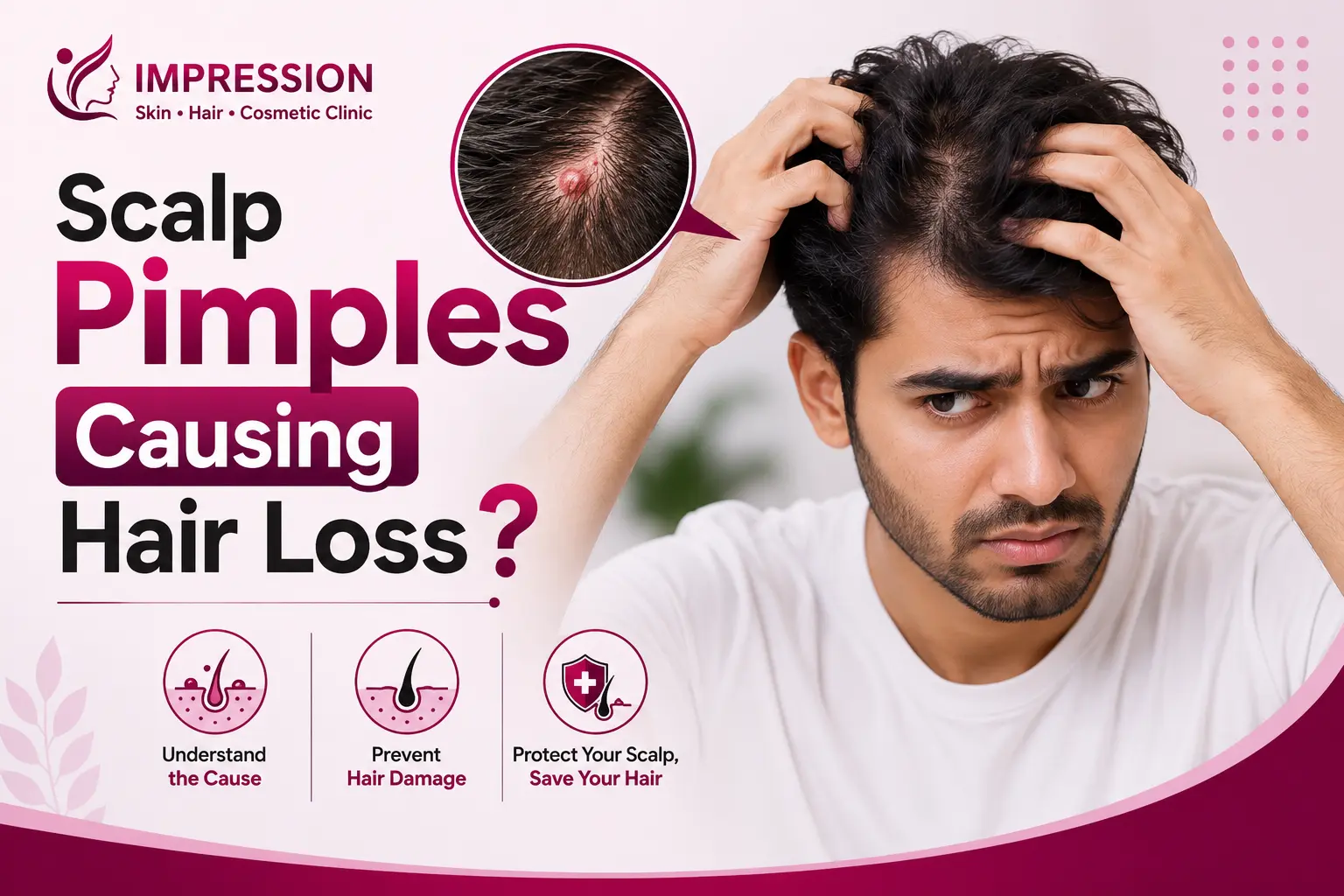
You part your hair and feel it before you see it — a tender bump, a raised lesion, sometimes several of them clustered across the scalp. Scalp pimples are uncomfortable, often itchy, and when they appear alongside hair fall, they trigger a specific kind of alarm: is this infection eating away at my hair follicles?
The short answer is: it depends entirely on what is causing them. Scalp acne and scalp pimples range from entirely harmless, self-resolving bumps to clinically significant infections that — if left untreated — can permanently damage hair follicles and cause irreversible hair loss. The difference between these outcomes is not dramatic; it is a matter of type, duration, and whether the condition is correctly identified and treated.
This guide breaks down the full spectrum of scalp pimple conditions, explains exactly how follicle infection leads to hair loss, identifies the warning signs that distinguish a minor issue from a serious one, and gives you a clear framework for action.
| 💡 The Connection Between Scalp Pimples and Hair Loss
Not all scalp pimples cause hair loss. Superficial pimples that resolve without scarring leave follicles intact. However, when infection penetrates the deep follicle structure — or when inflammation becomes chronic and untreated — the follicle can be permanently damaged. The key word is permanence: superficial scalp acne is reversible; deep scarring folliculitis is not. |
Folliculitis Explained: The Core Condition Behind Scalp Pimples
The medical term for most scalp pimples is folliculitis — inflammation of the hair follicle. The follicle is the tube-like structure in the skin from which each hair grows. When this structure becomes inflamed or infected, it swells, fills with pus or inflammatory fluid, and produces the visible bump or pustule at the scalp surface.
Folliculitis exists on a spectrum from superficial to deep, and this spectrum directly corresponds to its risk of causing permanent hair loss:
Superficial Folliculitis (Ostial Folliculitis)
The most common form. Inflammation is confined to the upper portion of the follicle — the infundibulum — and does not penetrate to the hair bulb or papilla. Presents as small, white-headed pustules at the base of hair shafts, often in clusters. Typically caused by Staphylococcus aureus bacteria, sometimes by Malassezia yeast or gram-negative bacteria.
Superficial folliculitis is almost always self-limiting and does not cause permanent hair loss. The hair in affected follicles may shed during the episode (temporary telogen effluvium from localised inflammation), but the follicle structure remains intact and hair regrows once the infection clears.
Deep Folliculitis (Furuncle / Carbuncle)
Deep folliculitis involves the entire follicle, extending into the surrounding dermis. A furuncle (boil) is a single deep follicle infection; a carbuncle is a cluster of interconnected deep follicle infections. Deep folliculitis produces large, painful, fluctuant nodules that may develop into abscesses. It typically requires medical treatment and, if recurrent or severe, can produce scarring that permanently destroys follicles.
Decalvans Folliculitis (Folliculitis Decalvans)
A specific and serious form of chronic deep folliculitis associated with a hyperinflammatory response to Staphylococcus aureus. Folliculitis decalvans produces tufted hairs (multiple hair shafts emerging from a single follicular opening as adjacent follicles merge due to inflammation), pustules, crusting, and progressive scarring alopecia. This is a dermatological condition requiring specialist management and is one of the most significant scalp-pimple-related causes of permanent hair loss.
Eosinophilic Folliculitis
A non-infectious form of folliculitis involving an eosinophilic (immune cell) infiltration of the follicle. More common in immunocompromised individuals. Produces intensely itchy papules and pustules across the scalp and face. Requires different treatment from bacterial folliculitis.
Types of Scalp Pimples: Not All Are Folliculitis
Before treating any scalp bump as folliculitis, it is important to recognise that several distinct conditions produce scalp pimples with different causes, different treatments, and different hair loss risk profiles.
| Condition | Key Features | Hair Loss Risk |
| Bacterial folliculitis (Staph) | Clustered white pustules, tender, worse after sweating | Low if treated promptly; moderate if chronic |
| Malassezia folliculitis | Uniform itchy papules, worsens with oily products | Low; responds to antifungal treatment |
| Scalp acne (comedonal) | Non-infected blackheads/whiteheads on scalp | Very low; cosmetic issue only |
| Cysts (pilar/epidermoid) | Firm, smooth, non-painful lumps; not pustules | Low; no follicle involvement unless infected |
| Contact dermatitis (infected) | Redness, bumps after new product; weeping | Low if trigger removed promptly |
| Folliculitis decalvans | Tufted hairs, pustules, crusting, progressive bald patches | High; causes permanent scarring alopecia |
| Dissecting cellulitis of scalp | Deep, fluctuant interconnected nodules, mostly men | High; significant scarring potential |
| Tinea capitis (ringworm) | Scaly patches + pustules + patchy hair loss | Moderate-high if untreated; reversible with treatment |
Infection Signs: How to Tell if Your Scalp Condition Is Serious
The distinction between a minor, self-resolving scalp bump and a condition that warrants urgent medical attention is not always visible to the untrained eye. However, specific signs consistently distinguish serious scalp infections from benign ones.
Signs of Superficial, Lower-Risk Scalp Acne
- Small, white or yellow pustules at the base of hair shafts, typically 1 to 3mm in diameter
- Mild tenderness when touched, but not deep or throbbing pain
- Appears after a specific trigger: tight hairstyle, heavy product use, sweating under a helmet or cap, a new shampoo
- Resolves within 7 to 14 days without specific treatment or with gentle antibacterial shampoo
- No hair loss in the affected area that outlasts the episode
Signs of Deep or Serious Scalp Infection Requiring Medical Attention
- Deep, throbbing pain in a scalp area — not just surface tenderness
- Large, raised nodules or fluctuant swellings that are soft when pressed (abscess formation)
- Fever or swollen lymph nodes in the neck or behind the ears accompanying scalp pimples
- Visible discharge from scalp lesions that is green, yellow, or blood-tinged
- Tufted hairs — groups of 4 to 8 hairs emerging from a single enlarged follicular opening
- Progressive bald patches developing precisely at the site of recurrent pimples or pustules
- Crusting that repeatedly returns after washing, particularly in the same scalp areas
- Scarring — smooth, shiny areas of scalp where hair has permanently stopped growing
| 🔴 Seek Dermatological Evaluation Promptly If You Have:
Pustules that have persisted for more than 3 weeks despite self-care Any visible hair loss in areas where pimples repeatedly occur Tufted or clustered hair shafts at pustule sites (classic folliculitis decalvans sign) Deep, painful nodules or abscesses on the scalp Fever or systemic symptoms alongside scalp lesions Scalp lesions that are spreading rather than resolving |
How Scalp Pimples and Folliculitis Cause Hair Loss: The Mechanisms
The connection between scalp infections and hair loss is not metaphorical — it is structural. Here is exactly how follicle inflammation and infection produce hair shedding at various levels of severity.
Mechanism 1: Acute Inflammatory Telogen Effluvium
When follicles in a localised area are acutely inflamed, the inflammatory cytokines released by the immune response — particularly interleukin-1 alpha (IL-1α) — directly signal those follicles to exit the anagen (growth) phase and enter telogen (resting). This produces temporary shedding in the affected area 6 to 10 weeks after the infection episode. This mechanism is reversible: once the infection clears and inflammation resolves, affected follicles return to anagen.
Mechanism 2: Direct Follicle Structure Damage
In deep folliculitis, the infective process directly damages the follicle structure. Bacterial enzymes (particularly proteases and lipases produced by Staphylococcus aureus) degrade the dermal papilla cells and the follicle’s structural proteins. Severe bacterial infection at the follicle base can destroy the germinative cells responsible for producing the hair shaft. If these cells are destroyed, that follicle cannot produce hair regardless of subsequent healing.
Mechanism 3: Fibrotic Scarring Post-Infection
When deep follicle inflammation or infection heals, it does so through scar formation rather than regenerative healing. Fibroblasts fill the damaged follicle space with collagen, creating a fibrous scar that permanently occludes the follicular canal. This scarring alopecia is the most permanent outcome of untreated or recurrent deep folliculitis. The scarring process is progressive: each episode of deep infection adds more fibrosis, and the resulting alopecia does not improve with anti-inflammatory treatment once scarring is established.
Mechanism 4: Follicular Destruction in Dissecting Cellulitis
Dissecting cellulitis of the scalp — a severe, chronic inflammatory scalp condition producing interconnected boggy nodules and abscesses — involves a combination of deep follicle destruction, sinus tract formation, and massive fibrotic scarring. Hair loss in this condition can be extensive and is almost entirely permanent. Treatment in this condition focuses on halting progression rather than reversing existing alopecia.
Causes of Scalp Pimples: Why They Develop
Understanding what causes scalp pimples is essential for both treatment and prevention. The triggers are varied and often multiple in the same individual.
Bacterial Causes
Staphylococcus aureus is responsible for the majority of bacterial scalp folliculitis. This organism lives harmlessly on the skin of most people but colonises follicles when the skin barrier is disrupted, when the follicular environment becomes anaerobic from occlusion, or when the local immune response is compromised. Risk factors for Staph folliculitis include: sweating under helmets, caps, or tight hairstyles; using oil-heavy products that occlude follicular openings; shaving the scalp creating microabrasions; and skin conditions that compromise the barrier.
Fungal Causes
Malassezia (the same yeast implicated in dandruff) causes a specific form of folliculitis characterised by uniform, monomorphic itchy papules and pustules across the scalp and upper body. This is particularly common in warm, humid climates (Mumbai’s climate creates near-ideal conditions) and after antibiotic use that disrupts the skin microbiome. Malassezia folliculitis is frequently misdiagnosed as bacterial folliculitis and does not respond to antibiotics — it requires antifungal treatment.
Tinea capitis, caused by dermatophyte fungi (Trichophyton species), produces a more severe form involving patchy hair loss, scaling, and sometimes kerion formation (a painful, boggy inflammatory mass). This is more common in children but occurs in adults with close contact with affected individuals.
Mechanical and Chemical Causes
Traction folliculitis occurs when tight hairstyles (braids, tight ponytails, hair extensions secured under tension) create chronic mechanical stress on the follicle openings, allowing bacterial entry and inducing inflammation. This is entirely preventable with hairstyle modification and is one of the most common causes of scalp pimples in women who wear tension hairstyles regularly.
Chemical folliculitis results from irritation of follicular openings by hair products: certain sulfates, fragrances, preservatives, and silicones can accumulate at follicle openings and trigger an inflammatory response. This is particularly common in people who use multiple styling products without regular deep cleansing.
Hormonal and Sebum-Related Causes
Scalp acne (as distinct from folliculitis) is driven by the same sebum-androgen-comedone pathway as facial acne. Elevated androgens from puberty, PCOS, stopping or changing hormonal contraceptives, or androgenic steroid use increase scalp sebum production. Excess sebum creates an anaerobic, nutrient-rich environment at follicular openings that both comedones (blocked follicles) and bacteria thrive in. This explains why scalp pimples and hair loss can both appear in people with PCOS or those using anabolic steroids — the same androgen excess drives both conditions.
Treatment Approach: What Actually Works
Treatment must be matched to the specific type of scalp condition. Using an antibacterial shampoo on Malassezia folliculitis, or an antifungal on bacterial folliculitis, will not produce meaningful improvement.
For Bacterial Folliculitis
- Antibacterial shampoo: chlorhexidine 2% or benzoyl peroxide wash applied to the scalp, left for 3 to 5 minutes before rinsing, used 3 times per week.
- Topical antibiotic: clindamycin lotion or erythromycin solution applied directly to affected areas twice daily for 4 to 6 weeks.
- Oral antibiotics: for moderate to severe bacterial folliculitis, oral doxycycline or flucloxacillin prescribed by a dermatologist.
- Drainage: deep abscesses or furuncles may require incision and drainage by a medical professional. Do not attempt to manually express deep scalp pustules.
For Malassezia (Fungal) Folliculitis
- Ketoconazole 2% shampoo: used as a leave-on treatment for 5 minutes, 2 to 3 times per week. Most cases respond within 4 to 6 weeks.
- Oral antifungal: itraconazole or fluconazole for resistant or widespread Malassezia folliculitis, under dermatologist prescription.
- Avoid heavy oil-based products: Malassezia is lipophilic and is fed by scalp oils. Switching to lighter, oil-free products reduces the substrate for yeast growth.
For Folliculitis Decalvans and Scarring Conditions
These conditions require specialist dermatological management. Treatment typically involves long-term oral antibiotics (rifampicin combined with clindamycin is the most evidence-based protocol), anti-inflammatory agents, and in some cases dapsone or isotretinoin. Early treatment is essential — once scarring is established, it cannot be reversed. Regular monitoring every 3 to 6 months is required.
General Scalp Hygiene During Active Folliculitis
- Avoid tight hairstyles, helmets, and head coverings that create occlusion during an active episode
- Wash pillowcases every 2 to 3 days during an active episode to prevent re-infection
- Do not use heavy oils or pomades on the scalp during active inflammation
- Use clean combs and brushes — sharing is a transmission risk for tinea capitis
Frequently Asked Questions
Q: Are scalp pimples serious?
A: It depends entirely on the type. Small, superficial scalp pustules that appear after sweating, helmet use, or product buildup and resolve within 1 to 2 weeks are common and not medically serious. They do not cause permanent hair loss. However, deep, recurrent, or persistent scalp pimples — particularly those accompanied by progressive hair loss, tufting of hairs, or expanding bald patches at the site of lesions — are clinically significant and warrant prompt dermatological evaluation. Conditions like folliculitis decalvans and dissecting cellulitis of the scalp can cause irreversible hair loss if not diagnosed and treated early.
Q: Can scalp pimples cause permanent hair loss?
A: Superficial folliculitis does not cause permanent hair loss. Deep folliculitis that heals through fibrotic scarring can permanently destroy follicles in the affected area. The permanence of hair loss depends on how deeply the follicle is damaged and whether scarring occurs. This is why early treatment of deep scalp infections is critically important — preventing scarring preserves the follicles. Once a follicle is replaced by scar tissue, hair transplant is the only option for restoration.
Q: What is the difference between scalp acne and folliculitis?
A: Scalp acne refers to comedonal lesions (blackheads, whiteheads) at scalp follicular openings driven by excess sebum and follicular plugging without infection. Folliculitis is inflammatory or infectious involvement of the follicle — typically presenting as pustules with a hair shaft visible at the centre. Scalp acne is primarily driven by hormonal/sebum factors; folliculitis is driven by bacterial, fungal, or inflammatory causes. Both can occur simultaneously, particularly in individuals with hormonally elevated sebum that both creates comedones and provides a substrate for bacterial overgrowth.
Q: Does picking or squeezing scalp pimples cause hair loss?
A: Yes — and significantly so. Manually squeezing deep scalp pustules or nodules introduces surface bacteria deeper into the follicle, extends the inflammatory zone, increases the risk of scarring, and can create secondary infections. It also increases the risk of spreading bacterial folliculitis to adjacent follicles. The correct approach: apply a warm compress to superficial pustules to encourage natural drainage; for deeper nodules, see a dermatologist for professional drainage if needed.
Q: Which shampoo is best for scalp pimples?
A: For bacterial folliculitis: a chlorhexidine 2% or zinc pyrithione shampoo used 3 times weekly is appropriate for mild cases. For Malassezia folliculitis: ketoconazole 2% shampoo is the most evidence-based choice. For general scalp acne prevention: a gentle, sulfate-free shampoo that does not leave heavy residue, combined with a salicylic acid scalp treatment once weekly to prevent follicular plugging. Always see a dermatologist for diagnosis before committing to a treatment shampoo — the wrong antifungal or antibacterial can make certain conditions worse.
| 💇 Worried About Scalp Pimples and Hair Fall? Get a Free Evaluation
Our dermatology and trichology team can distinguish between superficial scalp acne, bacterial folliculitis, and the more serious scarring conditions through clinical examination and trichoscopy. Book your free scalp evaluation today — early diagnosis is what separates a temporary condition from a permanent one. |
Disclaimer: This article is for educational purposes only and does not constitute medical advice. Please consult a qualified dermatologist for diagnosis and treatment of scalp conditions.
