
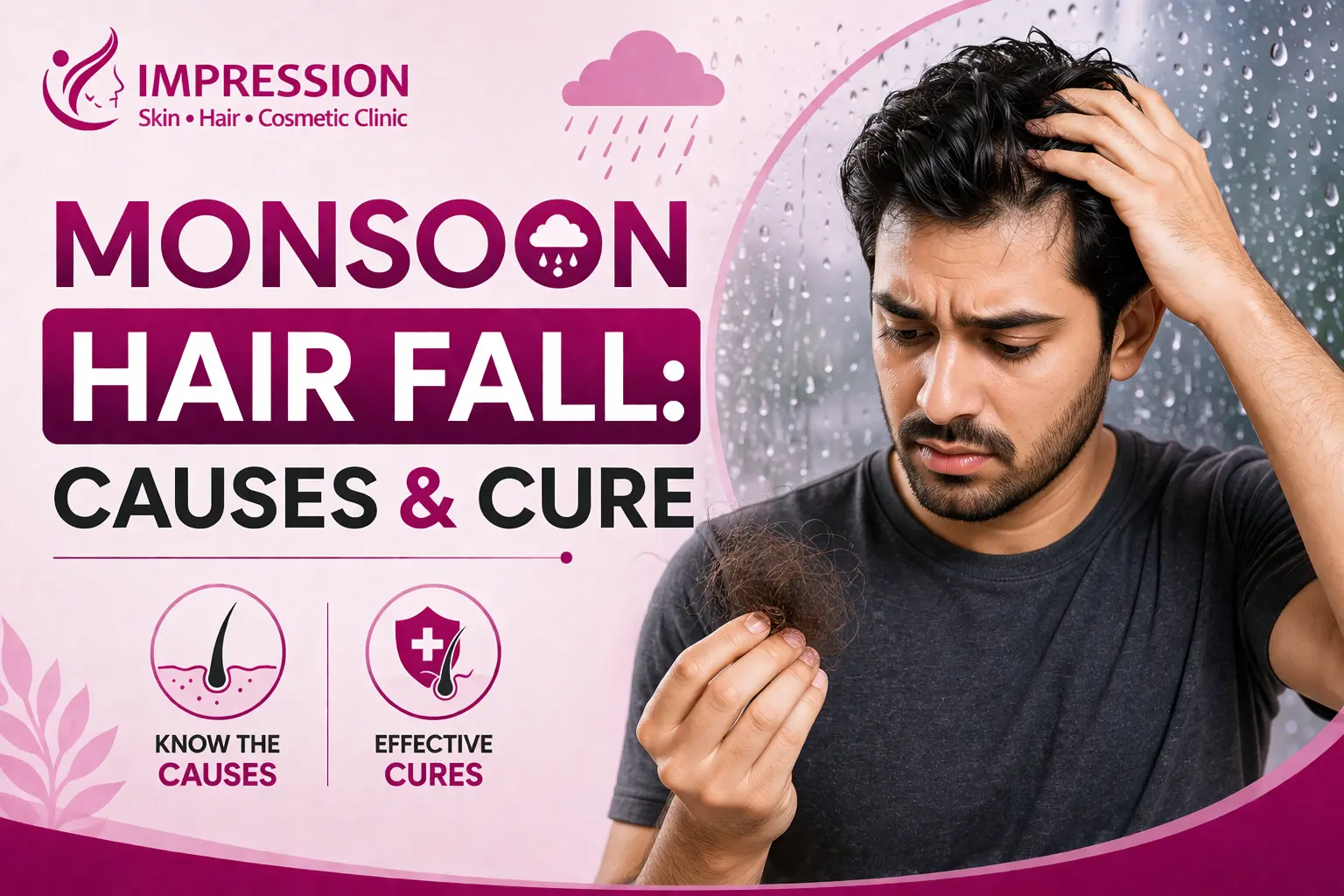
The arrival of the monsoon, while a welcome relief from summer’s heat, signals the most taxing season for hair health. If you have noticed an alarming increase in shedding, you are witnessing a phenomenon that dermatologists in 2026 have documented as “Monsoon Shedding,” where daily hair loss can spike by 30% to 50% above baseline. This increase is not merely a seasonal nuisance; it is a complex physiological reaction triggered by the intersection of environmental humidity, atmospheric chemistry, and an imbalanced scalp microbiome.
The Biophysics of Monsoon Hair Damage
To understand monsoon hair fall, one must look at the hair shaft as a dynamic, porous structure that reacts to external stimuli.
Hygral Fatigue and Structural Compromise
The primary physical stressor during the monsoon is atmospheric moisture. Hair is composed primarily of keratin, a protein held together by various bonds, the most sensitive of which are hydrogen bonds. When ambient humidity rises, these bonds break and reform in response to moisture ingress into the cortex—the inner layer of the hair shaft. This influx causes the shaft to swell unevenly, leading to lifted cuticles and a rough, frizzy texture.
This constant, repeated cycle of swelling (when wet) and contraction (when dry) is known as “hygral fatigue”. Over time, this process renders the hair shaft brittle and structurally compromised, making it prone to snapping along the length of the strand, rather than just shedding from the root.
Pollution-Induced Micro-Inflammation
Modern monsoon rain is rarely “pure.” It frequently acts as a carrier for atmospheric pollutants, sulfur dioxide, and nitrogen oxides, which create “acid rain”. When this acidic, pollutant-laden water makes contact with the scalp, it disrupts the skin’s natural acidic mantle—a protective barrier typically maintained at a pH of around 4.5 to 5.5. This pH disruption, coupled with exposure to particulate matter, triggers the release of pro-inflammatory cytokines and reactive oxygen species (ROS) at the follicular level. These molecules can damage follicular stem cells and interfere with keratin production, effectively placing the hair follicle under significant physicochemical stress.
The Scalp Ecosystem: A Fungal Playground
The human scalp is home to a complex community of microorganisms, primarily dominated by Malassezia species—a genus of yeast that thrives on the sebum produced by sebaceous glands.
The Malassezia-Inflammation Axis
During the monsoon, the scalp environment becomes warm, humid, and often sweat-drenched, providing an ideal, “greenhouse-like” habitat for Malassezia. When this yeast proliferates beyond healthy limits, it utilizes its own lipase and phospholipase enzymes to break down sebum into oleic acid. For many individuals, this acid acts as an irritant, causing significant inflammation and leading to conditions such as Seborrheic Dermatitis.
The Trigger for Telogen Effluvium
This inflammation is not localized; it sends distress signals to the hair follicle. In response to this metabolic and chemical stress, the body may prematurely force a large percentage of follicles currently in the growth (anagen) phase to transition into the resting (telogen) phase. This reactive process is known as Telogen Effluvium. The hair shedding that follows typically occurs one to three months after the initial stress event, meaning the hair you see falling today may be the result of stress that began weeks earlier.
Nutritional Foundations and Deficiency Risks
The monsoon season frequently coincides with shifts in lifestyle and diet, which can exacerbate hair fall through nutrient deficiency.
- Vitamin D and The Growth Cycle: With consistent cloud cover during the rainy season, natural UV exposure decreases, potentially lowering Vitamin D synthesis. Vitamin D is vital for the activation of dormant hair follicles and the maintenance of immune balance at the scalp; its deficiency does not usually cause immediate shedding but prevents healthy regrowth and extends the resting phase of follicles.
- Zinc and Iron: These minerals are essential for cellular repair and the synthesis of keratin. Deficiency in either, often exacerbated by restricted diets or malabsorption issues common during the season’s dietary shifts, can lead to structurally weak hair and increased telogen shedding.
The 2026 Comprehensive Monsoon Strategy
A proactive approach to 2026 monsoon hair care focuses on barrier protection and scalp health maintenance.
- Barrier-First Cleansing
Avoid the “squeaky clean” trap. Using harsh, high-sulfate shampoos strips the scalp of essential oils, causing a rebound effect where the scalp produces even more sebum, directly feeding Malassezia.
- Strategy: Use pH-balanced, non-stripping cleansers that preserve the scalp’s natural barrier while neutralizing environmental pollutants.
- Frequency: Wash 2-3 times per week, ensuring you reach the scalp thoroughly.
- Humidity Control and Cuticle Sealing
Managing frizz and moisture ingress is essential to preventing structural breakage.
- Strategy: Apply humectants (like glycerin) sparingly and only when layered under a sealant. Instead, prioritize cold-pressed oils with high oleic acid content (such as virgin coconut or sesame) to act as a physical barrier against humidity.
- Anti-Frizz: Incorporate leave-in serums containing hydrolyzed silk proteins; these create a breathable barrier against humidity without causing buildup.
- Immediate Scalp Dehumidification
Never go to bed with a damp scalp, as this provides a multi-hour window for fungal growth.
- Strategy: Use a microfiber towel to gently blot moisture—never rub, as wet hair is fragile. If necessary, use a hair dryer on the coolest setting to ensure the scalp is completely dry.
- Strategic Treatment
If itching or dandruff persists, use antifungal shampoos containing Ketoconazole or Piroctone Olamine once a week to maintain a balanced microbiome.
Frequently Asked Questions
Is monsoon hair shedding always considered “normal”?
A temporary, mild increase in shedding can be a seasonal response to environmental shifts. However, if the shedding continues for more than 6-8 weeks or you observe significant thinning in your part line, it indicates an underlying issue, such as Chronic Telogen Effluvium or Seborrheic Dermatitis, requiring clinical consultation.
Why do I feel more hair fall when I wash it?
You aren’t necessarily “losing” more hair; you are simply witnessing the removal of hairs that have already been forced into the telogen (resting) phase by previous stress. Washing facilitates the release of these “club hairs” that were already detached from the follicle.
Does the quality of the water I wash with matter?
Yes. In many urban areas, monsoon rain causes a surge in the mineral content or pollution levels in municipal water supplies. If possible, use a filtered showerhead to minimize exposure to chlorine and heavy metals that can further oxidize the hair shaft.
Are there any “safe” oils for the monsoon?
Yes. Avoid heavy, occlusive oils that trap sweat. Instead, use light, non-comedogenic oils like neem-infused or rosemary oil. Apply them to the scalp for no more than 30-60 minutes before washing to prevent creating a breeding ground for yeast.
Can stress from my lifestyle worsen this?
Absolutely. Telogen Effluvium is a reactive process; any additional metabolic stress—such as poor sleep, inadequate protein intake, or acute illness—can act synergistically with monsoon-related stress to precipitate more hair into the shedding phase. Maintaining a stable, nutrient-dense diet is your first line of internal defense.
