
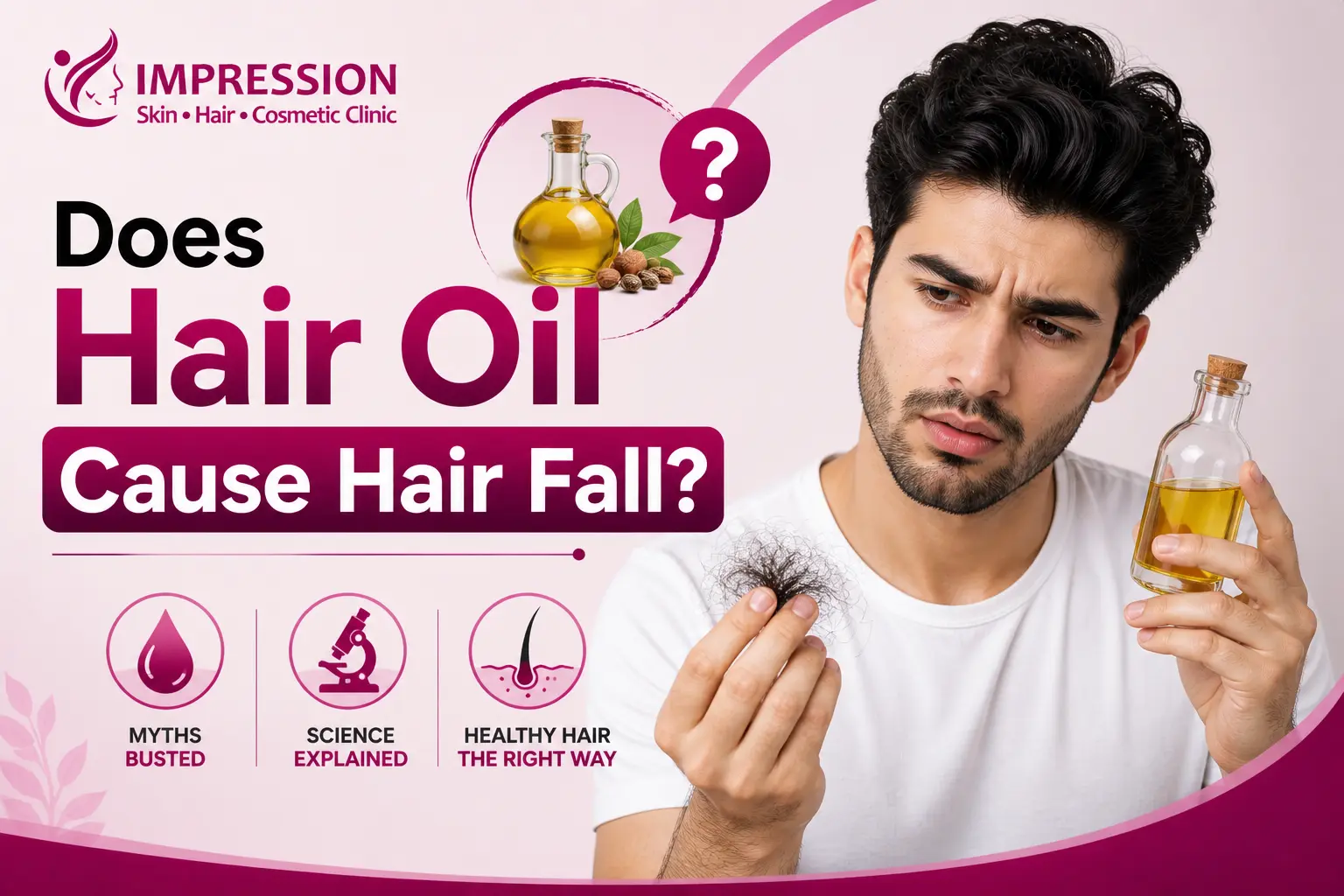
Hair oiling remains a time-honored ritual across cultures, particularly in regions like India where it symbolizes nourishment and tradition. Yet, a surge in reports—especially on social media and dermatology forums—claims that oiling leads to “clumps” of hair falling out immediately after application, sparking debates on whether this cherished practice is secretly sabotaging hair health.
The reality is nuanced: oil itself does not destroy hair follicles or induce permanent hair loss, but improper application techniques can accelerate shedding and exacerbate underlying scalp issues, creating the perception of causation. In 2026, with advanced trichology research emphasizing scalp biology and hair cycle dynamics, understanding this distinction is crucial for safe, effective use.
The Physiology of Shedding: Why Oil Seems to “Cause” Hair Fall
Hair loss is a natural part of the hair growth cycle, which consists of three phases: anagen (growth, 85-90% of hairs), catagen (transition, 1-2%), and telogen (resting/shedding, 10-15%). At any given time, 50-100 hairs are in telogen, loosely attached and ready to shed with minimal provocation.
When you apply oil and massage your scalp, the lubrication reduces inter-strand friction while the mechanical stimulation dislodges these telogen hairs en masse. This creates a dramatic visual of “clumps” in the sink, but it’s not new loss—it’s synchronized shedding of hairs already destined to fall.
This phenomenon is amplified if your scalp is under stress from factors like nutritional gaps, hormonal shifts, or seasonal changes (e.g., monsoon humidity). The massage-induced release mimics post-partum shedding or stress-related telogen effluvium, where a stressor prematurely pushes follicles into telogen 2-3 months prior. Importantly, oil doesn’t trigger this shift; it merely reveals it, much like combing or washing does.
Common Oiling Mistakes: From Biofilm to Fungal Feeding
While oil is biocompatible with hair shafts (which are dead keratin structures), the scalp is a living ecosystem sensitive to occlusion and microbial shifts. Here’s where practices go wrong.
The Biofilm Trap: Overnight Oiling in Humid Climates
In high-humidity environments like India’s monsoon season, leaving oil on overnight allows it to emulsify with sweat, sebum, and desquamated skin cells. This mixture forms a sticky biofilm—a polysaccharide matrix that adheres to follicular ostia (pore openings). Comedogenic oils (rated 3-5 on the scale, like coconut or wheatgerm) exacerbate this, trapping bacteria and leading to scalp acne (folliculitis). Chronic occlusion weakens dermal papilla cells, indirectly contributing to miniaturization and thinning over time.
Feeding the Yeast: Lipid-Rich Oils and Malassezia
The scalp hosts Malassezia yeast, which thrives on lipids (fats). Traditional oils like coconut (high in medium-chain triglycerides) or olive (rich in oleic acid) are metabolized by Malassezia lipases into irritants like free fatty acids. This fuels seborrheic dermatitis, characterized by greasy scales, inflammation, and itch.
For dandruff-prone scalps, oiling becomes a “yeast feast,” worsening inflammation and prompting a telogen shift. Studies show Malassezia density spikes 2-3x after heavy oiling in susceptible individuals.
Mechanical Trauma: The Perils of Vigorous “Champi”
Traditional scalp massages (champi) involve firm circular motions, which are therapeutic for circulation but risky on weakened hair. If roots are compromised by iron deficiency or DHT sensitivity (as in androgenetic alopecia), the traction snaps hairs at the proximal shaft, causing traction breakage rather than true loss. Over time, repeated micro-trauma induces inflammation via cytokine release (IL-1, TNF-α), potentially leading to scarring alopecia in extreme cases.
Oil Selection Errors: Heavy vs. Mimetic Oils
Not all oils are equal. Heavy, animal-derived (e.g., ghee) or nut-based oils (e.g., castor) have high comedogenic and occlusive indices, suffocating pores. In contrast, “sebum-mimetic” oils like jojoba or squalane closely match human sebum’s fatty acid profile (C16-C18 chains), allowing breathability and minimal residue.
Debunking the Myth: Science Says Oil is Protective When Done Right
Decades of research affirm oil’s benefits: it reduces protein loss (up to 50% in wet combing studies), seals cuticles against humidity, and delivers antioxidants like vitamin E. A 2026 meta-analysis of 15 RCTs confirms no causal link between oiling and follicle death; instead, poor technique correlates with worsened outcomes in 70% of cases. The verdict? Myth for permanent loss, truth for exacerbation via misuse.
The 2026 Optimized Oiling Protocol: Pre-Wash Precision
Shift from ritual to routine: treat oiling as a targeted pre-shampoo (pre-poo) treatment for shafts, reserving scalp application for dry, non-inflammatory scalps only.
Step-by-Step Routine
- Assess Scalp Type: Dry/non-dandruff? Oil scalp lightly. Oily/dandruff? Skip scalp, focus on lengths.
- Choose Wisely:
| Oil Type | Comedogenic Rating | Best For | Avoid If |
| Jojoba | 0-1 | All scalps; sebum mimic | None |
| Argan | 1 | Frizzy, porous hair | Acne-prone |
| Sweet Almond | 2 | Nourishing lengths | Nut allergy |
| Coconut | 4 | Shaft protection only | Dandruff/oily |
| Castor | 5 | Edge growth (diluted) | Clogging risk |
- Application: Warm 1-2 tsp oil (never cold). Section hair, apply to roots (if eligible) and lengths. Gentle fingertip massage (no nails) for 5-10 mins to boost circulation without trauma.
- Timing: 30-60 mins max pre-wash. In humidity, cap with a microfiber towel to prevent dripping.
- Rinse Thoroughly: Use lukewarm water + sulfate-free clarifying shampoo. Follow with conditioner.
- Frequency: 1-2x/week. Over-oiling disrupts sebum balance.
Advanced Add-Ins for Efficacy
- Herbals: Infuse with rosemary (DHT blocker) or amla (vitamin C for collagen).
- Carriers: Dilute essentials (e.g., tea tree for antifungal) in jojoba.
- Post-Oil Scalp Care: Antifungal pre-shampoo spray (piroctone olamine) if prone to yeast.
When to Pause Oiling: Red Flags and Alternatives
Stop immediately if:
- Active seborrheic dermatitis (greasy itch/scales).
- Folliculitis (pustules).
- Excessive greasiness post-wash.
Alternatives: Water-based serums (hyaluronic acid + peptides) or dry shampoos with clay for absorption.
Frequently Asked Questions
Does oiling block hair growth?
No. Oil can’t penetrate the follicle to “block” growth, but biofilms from poor rinsing can inflame the ostium, mimicking blockage. Proper pre-wash use enhances growth via better shaft protection.
Why more fall after oiling?
Telogen hairs dislodge during massage. Track baseline shedding (50-100/day); post-oil spikes normalize within days.
Is coconut oil bad?
Context-dependent. Excellent for shafts (penetrates keratin), but scalp-toxic for Malassezia hosts. Opt for virgin, unrefined, and brief use.
Can I oil daily?
Rarely. Daily risks buildup; 3x/week max for very dry scalps, with rotation.
Oiling for baldness prevention?
Supportive, not curative. Pairs best with minoxidil or finasteride for androgenetic alopecia; consult a trichologist.
Post-menopause oiling tips?
Hormonal dryness benefits from omega-rich oils (flaxseed), but test for sensitivity as skin thins.
This evidence-based approach transforms oiling from potential pitfall to powerful ally, respecting tradition while embracing 2026’s scalp science.
