
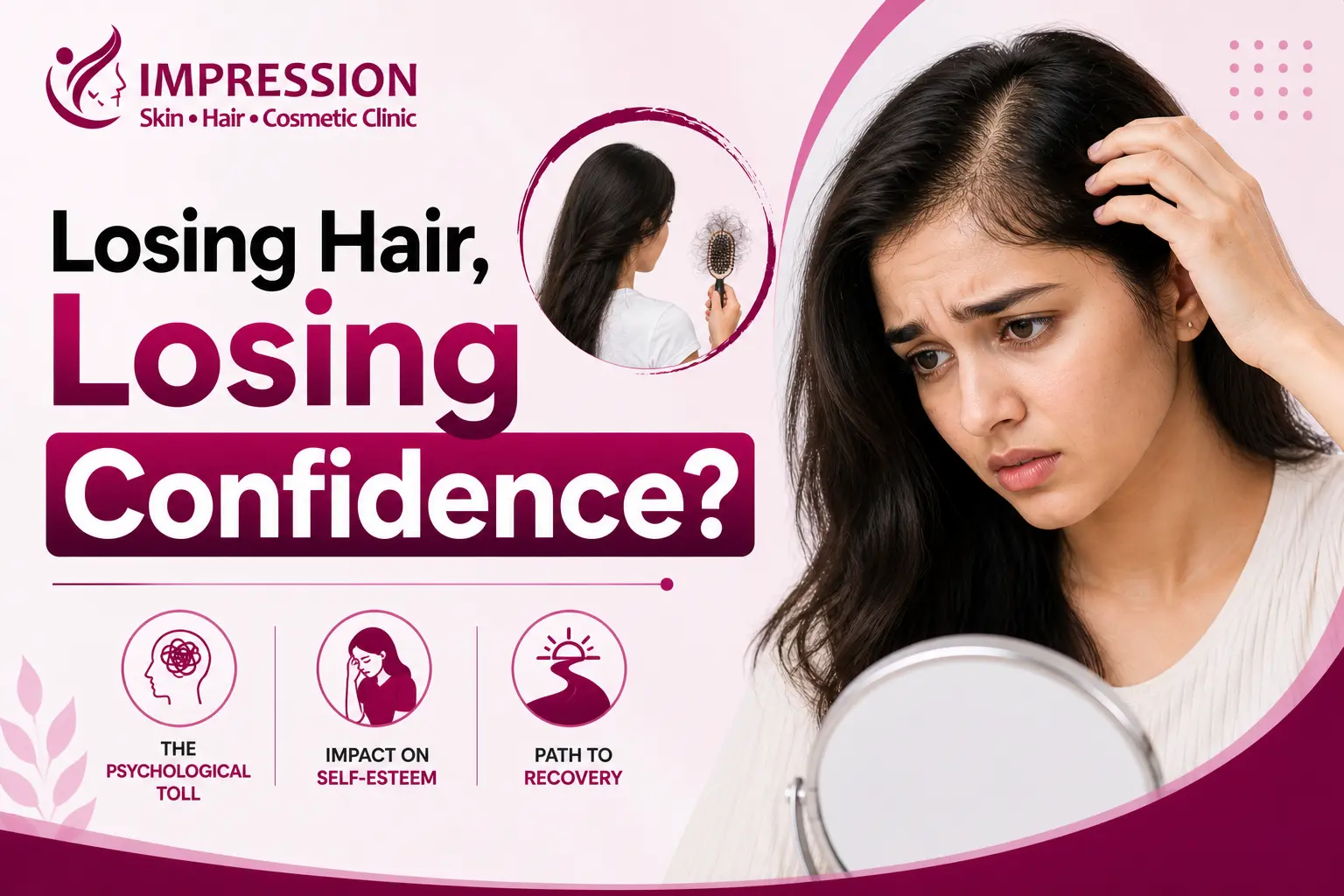
Hair loss strikes at the core of personal identity in our visually dominated world, where appearance often shapes first impressions and self-perception. It’s entirely normal—and profoundly human—to experience a deep emotional toll, including grief, anxiety, and diminished confidence when noticing thinning hair.
In 2026, with heightened awareness from social media and tele-dermatology, studies confirm that up to 40-50% of individuals with visible hair loss report clinically significant psychological distress, underscoring that this is far more than vanity.
The Profound Emotional Layers of Hair Loss
Hair serves as more than a cosmetic feature; it’s a cultural symbol of youth, vitality, and attractiveness, deeply intertwined with self-concept.
Hyper-Vigilance and Obsessive Monitoring
Many enter a state of constant self-scrutiny: mirror-checking every hour, photographing the crown from multiple angles, or meticulously counting shed strands (often reporting 100+ daily, far beyond the normal 50-100). This hyper-vigilance stems from anticipatory anxiety, where fear of progression amplifies perceived loss, creating a feedback loop of distress.
Social Withdrawal and Avoidance Behaviors
Thinning hair prompts avoidance of situations highlighting the scalp: bright lights, swimming, hats-off events, or group photos. For women, this manifests as elaborate hairstyling rituals; for men, reluctance to go hatless. Studies link this to social phobia, with 20-30% of alopecia patients exhibiting avoidance that impacts career and relationships.
Loss of Agency and Identity Mourning
The sensation of one’s body “betraying” you—aging prematurely or defying control—evokes grief akin to chronic illness. This erodes self-efficacy, leading to feelings of helplessness, especially in pattern baldness (androgenetic alopecia), where genetics feel like an inescapable fate.
The Vicious Stress-Hair Loss Cycle: Cortisol’s Role
Stress doesn’t just coincide with hair loss; it perpetuates it through a biochemical cascade.
Cortisol and Telogen Effluvium
Acute stress spikes cortisol, which disrupts the hair cycle by pushing anagen hairs (growth phase) into telogen (shedding) prematurely—a condition called telogen effluvium. Symptoms appear 2-3 months post-stressor, with diffuse shedding. Chronically elevated cortisol (from ongoing anxiety about loss) depletes nutrients like zinc and biotin needed for follicle health, compounding the issue. A 2026 review estimates 70% of telogen effluvium cases have a psychosomatic trigger.
Beyond Effluvium: Autoimmune and Genetic Amplification
In alopecia areata (patchy loss), stress exacerbates T-cell mediated attack on follicles. For androgenetic alopecia, cortisol sensitizes follicles to DHT, accelerating miniaturization.
Clinical Psychology: When It’s More Than “Normal”
Hair loss frequently intersects with diagnosable conditions.
| Condition | Prevalence in Hair Loss Patients | Key Symptoms | Differentiation from Normal Distress |
| Body Dysmorphic Disorder (BDD) | 11-13% (10x general population) | Preoccupation with minimal/nonexistent defects; compulsive checking; avoidance | Focus on imagined flaws despite reassurance/biopsies |
| Social Anxiety Disorder | 20-30% | Fear of judgment; palpitations in social settings | Leads to isolation beyond hair contexts |
| Major Depressive Disorder | 15-25% | Low mood, anhedonia, sleep issues, suicidal ideation | Persistent beyond physical treatment |
BDD, in particular, manifests as “alopecia anxiety,” with patients seeking endless biopsies despite normal results.
Breaking the Cycle: Evidence-Based Strategies for 2026
Recovery demands a dual approach: medical for the scalp, psychological for the mind.
Control the Controllables: Medical Empowerment
- Professional Assessment: Trichoscopy or scalp biopsy provides certainty, reducing anxiety by 40-50% in studies.
- Treatments: Minoxidil, finasteride, PRP, or transplants restore density, boosting self-efficacy.
Redefine Beauty and Identity
- Style Shifts: Embrace buzz cuts (men) or pixie crops (women)—2026 trends celebrate “scalp-positive” aesthetics via influencers.
- Cosmetics: Scalp concealers, fibers, or toppers offer immediate camouflage.
Holistic Mental Health Interventions
- Therapy: CBT targets distorted body image; mindfulness reduces cortisol. Combined with immunotherapy, it enhances regrowth and confidence.
- Support Networks: Alopecia groups reduce isolation; 80% report improved QoL.
- Lifestyle: Yoga/meditation lowers cortisol by 20-30%; nutrient-rich diets (biotin, omega-3) support cycles.
| Strategy | Evidence Level | Expected Benefit |
| Support Groups | High (cross-sectional studies) | ↓ Social phobia 50%; ↑ QoL |
| CBT/Psychotherapy | Moderate-High (systematic review) | ↓ BDD symptoms; ↑ regrowth |
| Scalp Micropigmentation | Emerging | Immediate aesthetic boost |
| Mindfulness Apps | Moderate | ↓ Cortisol, stress shedding |
Frequently Asked Questions
Can hair loss truly cause clinical depression?
Yes. Up to 25% of chronic hair loss patients meet depression criteria, with symptoms mirroring life-threatening illnesses: withdrawal, low energy, suicidal thoughts. Seek help if it persists >2 weeks.
Is the stress-hair cycle reversible?
Absolutely. Stress reduction (e.g., therapy) halts effluvium; regrowth resumes 3-6 months post-intervention.
How common is BDD in hair loss?
10x higher than general dermatology patients; males show higher rates (52% vs. 26% females).
When should I see a therapist?
If loss affects daily function (e.g., avoiding work/socializing), or if medical reassurance doesn’t alleviate worry.
Do wigs/transplants fix confidence?
Partially; they address aesthetics but pair best with therapy for lasting self-esteem gains.
Tips for partners/families?
Validate feelings without minimizing; encourage professional help; celebrate non-physical traits.
Hair loss tests resilience, but with integrated care, it becomes a catalyst for deeper self-acceptance. You’re not defined by your strands—reclaim your narrative.
