
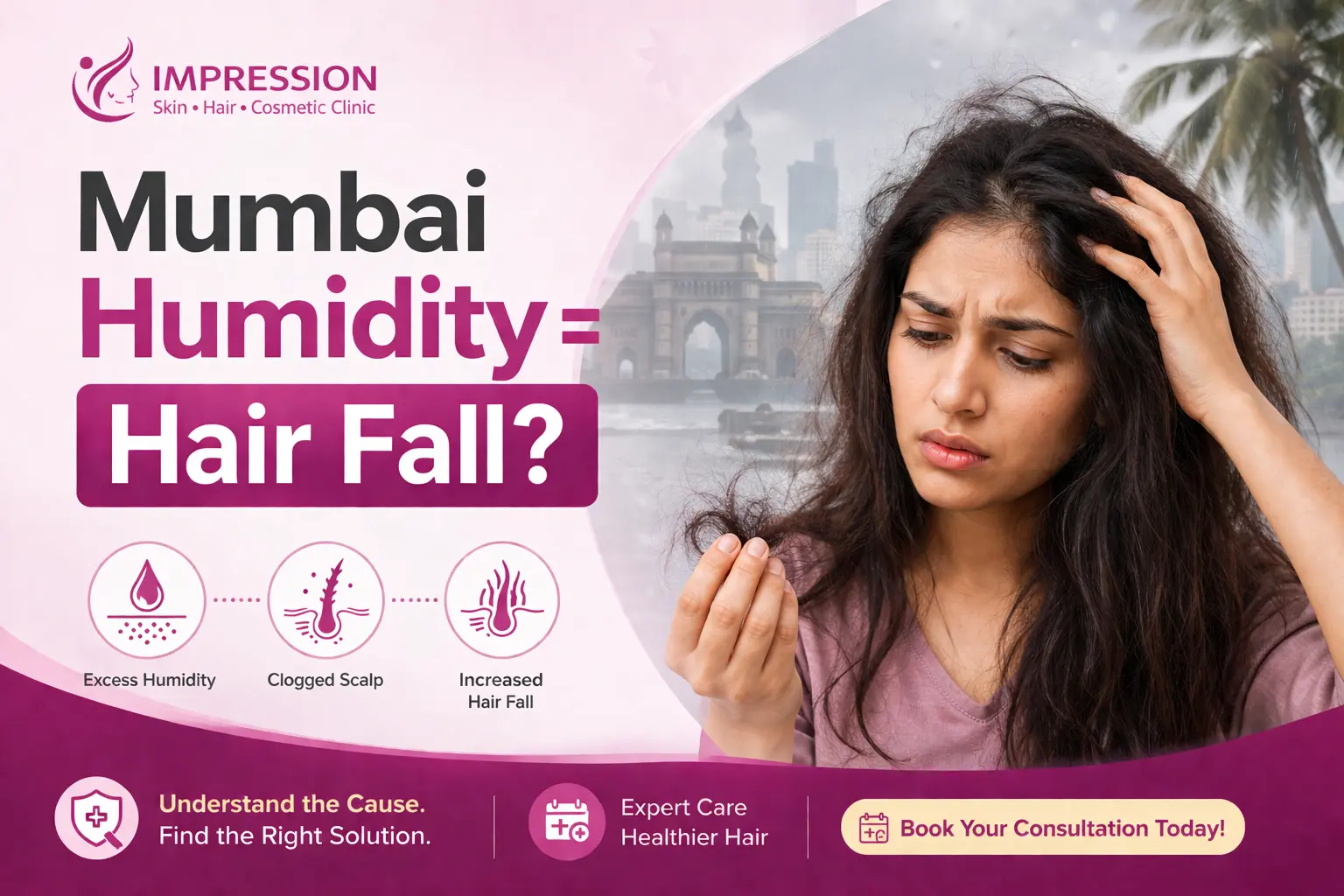
If you live in Mumbai and your hair has been falling more than usual, you are part of an enormous club. Dermatology clinics across the city consistently report hair fall as one of their most frequent presenting complaints — and a disproportionate number of patients report that their hair fall began or significantly worsened after settling in the city. Even long-term residents notice seasonal surges: the monsoon arrives, and so does the hair fall.
Mumbai is not a neutral environment for hair. Its combination of extremely high humidity for most of the year, significant air pollution, hard municipal water, year-round heat, and the specific scalp microbiome conditions that result creates a genuinely challenging ecosystem for hair follicles. This is not hyperbole — it is what the dermatological literature and clinical observation in Mumbai both confirm.
But ‘Mumbai makes hair fall’ is too simplistic to be useful. The question is: which of Mumbai’s specific environmental factors is actually driving your hair fall, in what combination, and what can be done about it specifically? This guide answers those questions with the depth they deserve.
| 🏙️ Mumbai’s Hair Challenge Is Multi-Factor
No single element of Mumbai’s environment causes hair fall on its own. The city’s impact on hair health comes from the simultaneous interaction of humidity (scalp microbiome disruption), pollution (direct follicle toxicity), water hardness (cuticle and scalp damage), and heat (sebum production acceleration). Understanding which combination applies to you is the key to effective management. |
Humidity: Mumbai’s Year-Round Scalp Stressor
Mumbai’s relative humidity averages between 60 and 75 percent during the ‘dry’ winter months (November to February) and rises to 85 to 95 percent — often touching 100 percent — during the monsoon (June to September). To put this in context: indoor humidity in air-conditioned spaces rarely drops below 55 to 60 percent even in winter. Mumbai residents are essentially living in a subtropical greenhouse year-round.
This persistent high humidity has specific, well-documented effects on both the scalp and the hair shaft.
The Malassezia Effect: Humidity Grows the Problem
Malassezia — the yeast present on all human scalps — thrives in warm, humid conditions. At 32 degrees Celsius and 85 percent humidity, its growth rate accelerates dramatically compared to the temperate indoor conditions where most hair care research is conducted. Mumbai’s climate creates near-ideal year-round conditions for Malassezia overgrowth, which is why seborrhoeic dermatitis is both more prevalent and more severe in Mumbai than in drier cities.
Dermatologists in Mumbai routinely observe patients who had no dandruff history before moving to the city developing persistent seborrhoeic dermatitis within 6 to 12 months of arrival. This is not coincidence — it is the predictable biological consequence of introducing a human scalp to year-round conditions that Malassezia exploits.
The hair fall consequence of this is significant: seborrhoeic dermatitis creates chronic perifollicular inflammation that shortens the hair growth cycle, increases daily shedding, and, in individuals with genetic predisposition to androgenic alopecia, accelerates follicular miniaturisation. Controlling Malassezia overgrowth in Mumbai’s climate requires active, ongoing management — not a one-time treatment course.
Hygroscopic Hair Damage: What Humidity Does to the Shaft
Hair is hygroscopic — it absorbs water from the surrounding environment. In high humidity, the hair cortex (the inner structural layer of the hair shaft) swells as water molecules are absorbed. In lower humidity, it contracts as water evaporates. In Mumbai, hair undergoes this swelling and contracting cycle continuously and with high amplitude — dramatically humid monsoon days followed by air-conditioned indoor dryness, then back into humid outdoor air.
This repeated hygral fatigue — the stress on the hair structure from cyclical swelling and contracting — progressively weakens the cuticle (the outer protective layer). Weakened cuticle scales lift and crack, increasing hair porosity (the hair’s tendency to absorb and lose water rapidly), reducing tensile strength, and making hair significantly more prone to breakage during washing and grooming. The result is a higher daily breakage count that contributes to the overall hair fall experience.
Humidity and Scalp Sweat: The Accumulation Problem
In high ambient humidity, the rate of perspiration from the scalp increases as the body attempts to cool itself. Scalp sweat, which contains lactic acid, urea, and sodium chloride, creates a scalp surface environment that:
- Lowers scalp pH further than sebum alone, potentially disrupting the scalp microbiome balance
- Combines with sebum to form a dense, sticky film on the scalp surface that traps pollution particles and product residue
- When allowed to accumulate (by infrequent washing in humidity), creates a warm, moist, nutrient-rich substrate that accelerates Malassezia growth
- Can contribute to scalp folliculitis in individuals prone to bacterial scalp infections, particularly under helmet use (common among Mumbai motorcyclists)
Pollution: Mumbai’s Invisible Hair Stressor
Air quality is rarely the first thing people associate with hair fall, but the emerging research on pollution’s direct effects on hair follicles is significant and increasingly difficult to ignore. Mumbai consistently records PM2.5 and PM10 particulate matter levels that exceed WHO guidelines, alongside elevated nitrogen dioxide, sulphur dioxide, volatile organic compounds, and heavy metal particulates from vehicle emissions, industrial sources, and construction.
What Pollution Particles Do at the Follicle Level
The most important study in this area, presented at the European Academy of Dermatology and Venereology in 2019, demonstrated that common urban pollutants (PM10 and PM2.5) reduce the expression of proteins that regulate hair growth in follicle cells: beta-catenin, cyclin D1, and cyclin E, all of which are critical to anagen phase maintenance. This effect was dose-dependent — higher pollution exposure correlated with greater suppression of these growth regulators.
Beyond this direct follicle protein disruption, pollution particles that settle on the scalp create secondary problems:
- Oxidative stress: pollution generates reactive oxygen species (ROS — free radicals) that damage DNA and cell membranes in follicle cells, accelerating cellular ageing and impairing the regenerative capacity of follicle stem cells.
- Inflammatory priming: pollutant particles activate pattern recognition receptors (PRRs) on scalp keratinocytes, triggering a chronic low-grade inflammatory state around follicles.
- Scalp microbiome disruption: pollution-derived compounds have antimicrobial properties that selectively disrupt certain beneficial microbiome species, altering the scalp’s microbial ecosystem in ways that may favour pathogenic overgrowth.
- Combination with humidity: pollution particles in Mumbai’s high-humidity air have higher bioavailability — they are more easily absorbed into scalp tissue than in dry air because the moisture carrier facilitates penetration. Mumbai’s combination of high pollution and high humidity is therefore more damaging than either factor alone.
The Commute Factor
Mumbai’s commuting culture is unique in its intensity. The average Mumbai commute involves prolonged exposure to outdoor pollution — on open transport (motorcycles, auto-rickshaws, open ferry decks), walking on congested streets, or standing on open train platforms. A 90-minute commute each way in peak Mumbai traffic represents significant daily pollution exposure for the scalp. This is a city-specific exposure pattern that generically written hair care advice does not account for.
Seasonal Hair Fall Patterns in Mumbai: What’s Normal, What’s Not
Hair fall in Mumbai has a distinct seasonal rhythm that many residents observe but may not understand. Recognising the pattern helps distinguish expected seasonal variation from genuinely abnormal or worsening hair loss.
Pre-Monsoon (March to May): The Summer Surge
As temperatures and humidity begin rising from March onward, scalp sebum production increases with the heat and Malassezia activity begins to accelerate ahead of the full monsoon. Many Mumbai residents report that their scalp becomes noticeably oilier and their dandruff more active from March. Hair fall during this period is often above baseline as the scalp inflammation from Malassezia overgrowth increases.
Monsoon (June to September): Peak Humidity, Peak Scalp Stress
This is when most Mumbai residents report the highest hair fall. Multiple factors converge simultaneously: Malassezia growth is at its maximum, the hygral fatigue cycle for hair shafts is most intense (rain and drying alternating), scalp sweating is continuous, and the city’s pollution is washed from the air but concentrated at ground level where commuters are. The psychological stress of difficult commuting conditions during monsoon is also an underappreciated cortisol contributor.
Additionally, as detailed in the biology of telogen effluvium, there is a natural human tendency toward increased telogen entry in summer (related to photoperiod changes), producing a shedding peak in the autumn. In Mumbai, this photoperiod effect is amplified by the environmental stressors of monsoon, producing particularly pronounced shedding in August to October.
Post-Monsoon (October to November): The Shedding Peak
Many Mumbai residents experience their worst hair fall in October and November, not during the monsoon itself. This is the combined output of the monsoon season’s telogen effluvium trigger (2 to 3 month delay) and the natural autumn shedding peak. This post-monsoon shedding is widely observed, clinically expected, and for most people without underlying conditions, self-limiting — resolving by December or January.
Winter (November to February): Relative Respite
Mumbai’s mild ‘winter’ brings reduced humidity (down to 55 to 65 percent), slightly lower temperatures, and lower Malassezia activity. Hair fall typically reduces during this period, and many Mumbai residents notice their hair at its best quality during these months. For those with persistent hair fall even during Mumbai winter, an underlying cause beyond the seasonal/environmental factors should be investigated.
| Season | Primary Hair Stressors | Expected Hair Fall Level |
| Pre-monsoon (Mar–May) | Rising heat and sebum, early Malassezia acceleration | Above baseline; manageable with prevention |
| Monsoon (Jun–Sep) | Peak humidity, hygral fatigue, Malassezia peak, pollution ground concentration | Highest of year; expect increased shedding |
| Post-monsoon (Oct–Nov) | Delayed TE from monsoon + natural autumn shedding peak | Peak shedding episode; 6–8 week window |
| Winter (Nov–Feb) | Lowest humidity and temperature; reduced Malassezia | Best hair quality; persistent fall = investigate |
Why Hair Falls More in Mumbai: The Compounding Effect
The most important concept for understanding hair fall in Mumbai is not any single factor — it is the compounding of multiple simultaneously acting stressors that individually would be manageable but collectively create an outsized impact on hair health.
The Four-Factor Amplification
Humidity + heat: Creates year-round Malassezia growth conditions and continuous hygral fatigue cycle. Neither alone would be as damaging as both together.
Malassezia + hard water mineral deposits: The seborrhoeic scalp inflammation from Malassezia is worsened by the altered scalp pH from hard water mineral accumulation. The combination is more inflammatory than either alone.
Pollution + humidity: Pollution particles in humid air have enhanced bioavailability for scalp absorption. The oxidative stress from pollution compounds the inflammatory state from Malassezia. Each amplifies the other’s impact.
Environmental stressors + relocation/commuting stress: The physiological burden of Mumbai’s environmental factors adds to the cortisol load from commuting stress, work pressure, and urban life pace. The body’s ability to buffer the environmental stressors is reduced when the stress hormone system is simultaneously taxed.
The result of this compounding is that people in Mumbai can experience significant hair fall from environmental causes that would not produce the same effect in a less demanding environment — not because their hair is inherently more fragile, but because the cumulative environmental burden is genuinely higher.
Mumbai-Specific Hair Care Protocol: What the Evidence Supports
1. Active Scalp Antifungal Management (Year-Round, Not Just When Symptomatic)
Given Mumbai’s year-round Malassezia-conducive conditions, preventive antifungal scalp management is advisable even for residents without visible dandruff. Subclinical seborrhoeic dermatitis (Malassezia overgrowth without obvious flaking) can still drive perifollicular inflammation. A zinc pyrithione or ketoconazole 1% shampoo used once weekly as a maintenance measure prevents the Malassezia overgrowth that Mumbai’s environment continuously encourages. During monsoon, increase to twice weekly.
2. Humidity-Adapted Washing Frequency
Mumbai’s climate means that scalp sebum and sweat accumulate faster than in drier climates. Most Mumbai residents living active lives need to wash 3 to 4 times per week minimum — using a gentle, sulphate-free shampoo. On non-wash days, a scalp-only rinse with plain water (without shampoo) can refresh the scalp without the oil-stripping effect of daily shampooing.
3. Shower Filtration for Water Quality
A KDF or vitamin C shower filter installed at the showerhead removes chlorine and reduces the cuticle-stripping effect of treated municipal water. While it does not fully soften hard water (which requires a water softener system), chlorine removal alone produces measurable improvement in hair texture and reduces scalp irritation. Use a chelating shampoo once every 3 to 4 weeks to remove accumulated mineral deposits.
4. Pollution Protection and Scalp Detox
- Wash the scalp on days of heavy outdoor pollution exposure rather than saving the wash for the next day.
- Apply a light antioxidant scalp serum (containing niacinamide, vitamin E, or resveratrol) to counteract free radical damage from pollution particulates.
- Wear a light cap or hat during peak-pollution commuting periods — physical protection prevents particulate deposition on the scalp.
- Do not allow scalp washing to go beyond 3 to 4 days during monsoon when outdoor pollution is concentrated at ground level.
5. Hygral Fatigue Management
Reduce the severity of the wet-dry cycle damage by: applying a leave-in protein treatment (containing hydrolysed keratin or wheat protein) once a week to strengthen the cuticle before humidity exposure; air-drying rather than heat-drying where possible to reduce the mechanical stress of the drying process; and using an anti-humidity serum (silicone-based or natural alternatives like camellia oil) on the lengths when going outdoors in high humidity to reduce moisture absorption by the already-damaged cuticle.
6. Nutritional and Internal Support
- Maintain ferritin above 70 ng/mL (get tested annually — urban, active Mumbai residents are at above-average risk for iron depletion).
- Supplement vitamin D: despite Mumbai’s sun, active indoor professional life means many residents are deficient. Aim for serum levels of 50 to 80 ng/mL.
- Omega-3 supplementation (or consistent fatty fish consumption) reduces the systemic inflammatory response to environmental stressors.
- Probiotic supplementation: emerging research supports gut microbiome health as a modulator of skin and scalp Malassezia response — particularly relevant in a city where antibiotic use is common and food hygiene varies.
7. Seasonal Preparation
Pre-empt the monsoon surge: increase antifungal shampoo frequency from May as the pre-monsoon humidity rises, before seborrhoeic dermatitis escalates into a full flare. Similarly, be prepared for the post-monsoon shedding peak in October and November — knowing it is coming and why helps prevent the anxiety that itself becomes a hair fall trigger.
Frequently Asked Questions: Hair Fall in Mumbai
Q: Why does hair fall more in Mumbai?
A: Mumbai’s hair fall burden comes from the compounding of four simultaneously acting environmental stressors: year-round high humidity that drives Malassezia yeast overgrowth and seborrhoeic scalp inflammation; significant air pollution that directly suppresses follicle growth proteins and generates oxidative stress; hard municipal water that damages the hair cuticle and contributes to scalp mineral buildup; and year-round heat that accelerates sebum production and creates continuous scalp challenges. No single factor alone produces the hair fall that their combination does. Managing all four simultaneously is the most effective approach.
Q: Is hair fall during Mumbai monsoon normal?
A: Yes, for most people. The monsoon in Mumbai creates peak conditions for Malassezia growth (maximum humidity and heat), increases hygral fatigue on hair shafts, and concentrates ground-level pollution during rain. Additionally, the natural human hair cycle produces a shedding peak in the autumn (a photoperiod-related telogen effluvium), which in Mumbai’s climate is amplified and arrives earlier. Monsoon hair fall that is diffuse (not patchy), resolves by November or December, and does not permanently reduce density is expected seasonal shedding. Hair fall that persists or continues to worsen into winter warrants investigation.
Q: Can Mumbai’s humidity permanently damage hair?
A: The hair shaft damage from chronic hygral fatigue (the swelling and contracting cycle from humidity) can be significant and cumulative over years, but it affects the hair shaft rather than the follicle. This means the damage affects the hair you already have (making it drier, more porous, and more breakage-prone) but does not permanently impair the follicle’s ability to grow new, healthy hair. New hair growing from protected, well-nourished follicles will come in undamaged. Protecting existing hair from hygral fatigue with anti-humidity products, protein treatments, and reduced heat styling prevents the cumulative shaft damage from compounding.
Q: Does living near the sea in Mumbai affect hair fall?
A: Yes — coastal areas of Mumbai (Marine Lines, Worli, Bandra seafront, Juhu) experience salt-laden sea breezes that deposit sodium chloride on the scalp and hair. Salt is hygroscopic, drawing moisture from the hair shaft and dehydrating both hair and scalp. It also alters scalp pH and can irritate the scalp surface. People living in coastal areas of Mumbai often notice their hair is drier, their scalp more irritated, and their dandruff more persistent than residents of more inland areas. Regular rinsing after outdoor coastal exposure and a strengthening protein treatment once a week are particularly relevant for coastal Mumbai residents.
Q: Is hair fall in Mumbai only from water or also from air?
A: Both are genuine contributors, operating through different mechanisms. Water hardness (calcium, magnesium) and chlorine damage the hair cuticle through direct chemical interaction at each wash; over months this produces significant cumulative shaft weakening and scalp mineral buildup. Air pollution damages hair follicles through direct suppression of growth proteins, free radical generation, and inflammatory priming — effects that are more direct on follicle biology and therefore more relevant to actual follicular hair loss (as opposed to shaft breakage). Both require specific mitigation strategies, which is why addressing only one (getting a shower filter but ignoring pollution protection, or vice versa) produces incomplete results.
Q: When should a Mumbai resident seek professional help for hair fall?
A: Seek professional evaluation if: hair fall is significantly above your baseline and has not improved after the monsoon and post-monsoon season (i.e., persists into January); scalp symptoms including persistent itching, scaling, redness, or tenderness are present throughout the year rather than just seasonally; hair density is visibly reducing in photos taken over 6 to 12 months; or hair fall is accompanied by fatigue, weight changes, menstrual irregularity, or other systemic symptoms. Seasonal hair fall that follows the expected monsoon-to-post-monsoon pattern, resolves in winter, and does not reduce overall density does not require professional evaluation beyond good preventive scalp care.
Q: Does AC (air conditioning) help or hurt hair in Mumbai?
A: Both, depending on how it is managed. Air conditioning reduces ambient humidity, which reduces Malassezia growth conditions and decreases hygral fatigue on hair shafts — these are genuine benefits. However, very low humidity in strongly air-conditioned environments (below 40 percent) causes excessive moisture evaporation from the hair shaft, worsening dryness and brittleness. The ideal indoor humidity for hair health is 40 to 55 percent. Extremely cold AC temperatures combined with sharp transitions to hot, humid outdoor air create a severe hygral fatigue cycle. Using a mild leave-in conditioner before moving from heavily air-conditioned to outdoor conditions provides a buffer for the hair shaft during these transitions.
| 💇 Struggling With Hair Fall in Mumbai? Free Consultation
Our Mumbai-based trichology team understands the city’s specific environmental challenges better than any generic hair care guide can address. We assess whether your hair fall is seasonal/environmental, scalp-condition-driven, nutritional, hormonal, or a combination — and give you a plan specific to your pattern, your lifestyle, and Mumbai’s unique climate. Book your free hair fall evaluation today. |
Disclaimer: This article is for educational and awareness purposes only and does not constitute medical advice. Please consult a qualified dermatologist or trichologist for personalised diagnosis and treatment.
