
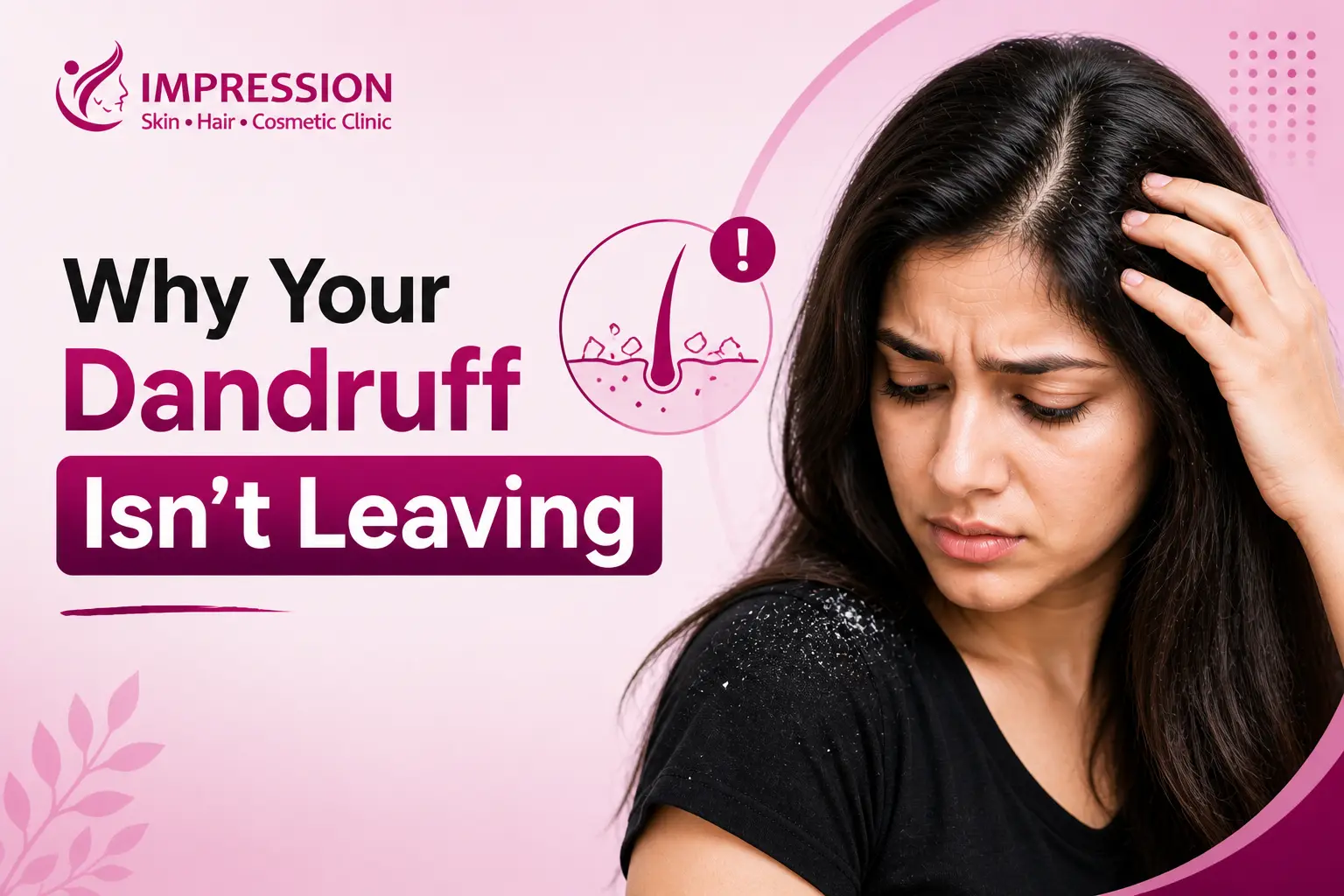
You have tried the blue shampoo, the green shampoo, the medicated one from the pharmacy, the one your mother swore by, the one with the celebrity endorsement. You may have oiled your scalp, avoided oiling it, washed every day, washed every three days, tried home remedies involving coconut oil, lemon, and apple cider vinegar.
And the dandruff is still there.
Persistent, treatment-resistant dandruff is not a hygiene failure or a personal shortcoming. It is a clinical signal. When dandruff does not respond to standard over-the-counter treatment, it is telling you one of several important things: either the treatment approach is wrong for your specific type of dandruff, or what you are calling dandruff is actually something else entirely, or there is an underlying systemic factor sustaining it that the shampoo alone cannot address.
This guide will decode what your persistent scalp condition is actually communicating — and give you the most evidence-based path to finally resolving it.
| 💡 The Core Problem with Standard Dandruff Treatment
Most anti-dandruff products are designed for mild, typical dandruff from mild Malassezia overgrowth. When dandruff persists despite consistent use of these products, it usually means one of three things: the condition is more severe than a standard OTC product can address, the diagnosis is incorrect (it may be psoriasis, contact dermatitis, or another condition), or an underlying systemic factor is sustaining the Malassezia overgrowth despite topical treatment. |
Understanding Why Your Scalp Has Dandruff: The Real Biology
Dandruff is not caused by dryness, dirty hair, or infrequent washing — these are persistent myths that lead people to use the wrong treatments. The vast majority of dandruff is caused by a species of yeast called Malassezia (previously called Pityrosporum). Malassezia is a lipophilic (fat-loving) organism that is permanently present on every human scalp. It feeds on the sebum (oil) secreted by scalp sebaceous glands and in doing so produces oleic acid — a fatty acid that is irritating to susceptible scalp skin.
In scalps with a normal immune response to oleic acid, Malassezia lives in equilibrium without symptoms. In scalps where the immune response to oleic acid is dysregulated — either hypersensitive or insufficiently regulated — the oleic acid triggers an inflammatory cascade that accelerates the normal 28-day skin cell turnover to as little as 7 to 14 days. This rapid turnover produces the characteristic flaking of dandruff.
The critical implication: dandruff is not fundamentally a problem of skin dryness, inadequate washing, or poor hygiene. It is primarily an immune response problem to a normal scalp organism. This is why changing your washing frequency or switching to a moisturising shampoo does not reliably resolve it.
What Makes Malassezia Overgrow?
When Malassezia is in controlled balance, symptoms are absent or mild. Several factors push Malassezia into overgrowth and increase the severity of the immune response:
- Excess sebum production: More sebum means more food for Malassezia. High-fat diet, hormonal changes that increase androgen levels (puberty, PCOS, stress), and certain medications (corticosteroids, lithium) all increase scalp sebum production.
- Humidity and heat: Warm, moist environments accelerate Malassezia growth. This is why dandruff is often worse in summer and in high-humidity cities like Mumbai.
- Immune system factors: Malassezia-related dandruff is significantly more severe in people with immunosuppression (HIV, organ transplant recipients, those on immunosuppressive medication), suggesting that immune regulation of Malassezia is central to symptom severity.
- Neurological conditions: Seborrhoeic dermatitis is disproportionately prevalent in patients with Parkinson’s disease and in people who have had strokes affecting specific brain regions, suggesting that neural regulation of sebum and immune response is part of the picture.
- Stress: Cortisol modulates the scalp immune response and increases sebum production via androgen stimulation. Chronic stress is one of the most consistent triggers for dandruff flares.
- Gut dysbiosis: Emerging research identifies gut microbiome disruption as a factor in skin and scalp Malassezia overgrowth through systemic immune dysregulation. Antibiotic courses that disrupt gut flora can trigger or worsen dandruff episodes.
Chronic Dandruff Causes: What’s Actually Sustaining It
When dandruff persists despite treatment, one of the following is almost always the explanation:
1. Seborrhoeic Dermatitis Requiring Prescription-Strength Treatment
Mild dandruff responds to OTC zinc pyrithione or selenium sulphide shampoos. Seborrhoeic dermatitis — the more inflammatory, more severe form — often does not. Seborrhoeic dermatitis produces greasy yellowish scales, visible redness, and may affect the face (around the nose, eyebrows, and ears) as well as the scalp. It typically requires ketoconazole 2 percent (available OTC in some countries but prescription-strength in others) and in flares may need a course of topical corticosteroid solution to control the inflammatory component.
Many people with seborrhoeic dermatitis have been using zinc pyrithione shampoos consistently but ineffectively. The step-up to ketoconazole — a specific antifungal — plus treating the inflammation (not just the yeast) is the clinical intervention they have been missing.
2. Scalp Psoriasis Misdiagnosed as Dandruff
Scalp psoriasis is frequently misidentified as severe dandruff — both produce scalp flaking and can cause itching. The distinctions that matter: psoriasis scales are thicker, silvery, and adhere more firmly to the scalp; psoriasis plaques have a sharply defined border; psoriasis frequently extends beyond the hairline to the forehead, behind the ears, and to the back of the neck; and psoriasis is often present elsewhere on the body (elbows, knees, lower back).
Anti-dandruff shampoos provide minimal to no benefit for scalp psoriasis. Appropriate treatment requires coal tar or salicylic acid shampoos to lift scale, topical corticosteroids to reduce inflammation, and in moderate-to-severe cases, systemic or biologic therapy. Using anti-dandruff products on psoriasis while the correct diagnosis is missed means months or years of ineffective treatment.
3. Contact Dermatitis from Hair Products
An allergic reaction to an ingredient in a shampoo, conditioner, hair colour, or styling product can produce scalp redness, itching, and flaking that precisely mimics dandruff. Common sensitising agents in hair products include: paraphenylenediamine (PPD) in hair dye, formaldehyde-releasing preservatives, fragrance compounds, and certain surfactants.
The identifying feature of contact dermatitis is that it coincides with the use of a specific product (or a new product) and resolves when that product is discontinued. If your ‘dandruff’ began after a new hair product or a hair colour appointment, contact dermatitis is the first differential to consider. A dermatologist can perform patch testing to identify the specific allergen.
4. Tinea Capitis (Scalp Ringworm) in Adults
Tinea capitis — fungal infection of the scalp caused by dermatophyte fungi (Trichophyton species) rather than Malassezia — is more common in children but does occur in adults. It produces scalp scaling that can look like dandruff but is typically accompanied by patchy hair loss in the affected areas, and sometimes by erythema (redness) and pustules.
Crucially, tinea capitis does not respond to standard anti-dandruff shampoos because its causative organism (a dermatophyte) is different from Malassezia. It requires systemic antifungal treatment (oral terbinafine or griseofulvin) and specific medicated shampoos (selenium sulphide or ketoconazole) as adjuncts. This is a case where the correct diagnosis dramatically changes the treatment required.
5. Scalp Folliculitis
Folliculitis — inflammation or infection of the hair follicle — can produce scalp symptoms that include flaking, itching, crusting, and small pustules on the scalp. In its mild form it may be mistaken for dandruff. Bacterial folliculitis (typically from Staphylococcus aureus) and Malassezia folliculitis are distinct conditions with different treatments. Bacterial folliculitis requires antibacterial wash and sometimes oral antibiotics; Malassezia folliculitis requires antifungal treatment.
6. A Systemic Driver That Keeps Re-Seeding the Condition
Even when the scalp treatment is appropriate and correctly applied, dandruff will recur if a systemic factor is maintaining the conditions for Malassezia overgrowth. The most common systemic drivers of treatment-resistant dandruff include: uncontrolled diabetes (elevated blood glucose promotes fungal growth), immunosuppression from any cause, unmanaged stress (sustained sebum increase), androgenic hormonal conditions (PCOS, elevated androgens from other causes), and gut dysbiosis from prolonged antibiotic use or inflammatory bowel conditions.
| Scalp Condition | Key Distinguishing Features | Correct Treatment Approach |
| Mild dandruff (pityriasis capitis) | White/grey dry flakes, no redness, scalp not oily | Zinc pyrithione or selenium sulphide shampoo 2–3x/week |
| Seborrhoeic dermatitis | Yellow greasy scales, redness, may affect face | Ketoconazole 2% shampoo + topical steroid for flares |
| Scalp psoriasis | Thick silver scales, defined plaques, extends beyond hairline | Coal tar/salicylic acid shampoo + topical corticosteroid |
| Tinea capitis (ringworm) | Patchy hair loss with scaling, possibly pustules | Oral antifungal (terbinafine) + medicated shampoo |
| Contact dermatitis | Began with new product, resolves when product stopped | Identify and eliminate trigger; patch testing |
| Scalp folliculitis | Small pustules, crusting, distinct from flat flaking | Antibacterial or antifungal depending on cause |
When Dandruff = Scalp Disease: The Signs That Change Everything
Most dandruff is benign and manageable. But certain presentations signal that the scalp condition has progressed beyond simple dandruff into territory that warrants urgent dermatological attention. Recognising these signs is clinically important.
| 🔴 See a Dermatologist Promptly if You Notice Any of These
Dandruff that is accompanied by hair loss in the affected areas (suggests tinea capitis, lichen planopilaris, or severe seborrhoeic dermatitis) Thick, well-demarcated plaques extending onto the forehead, behind the ears, or onto the neck (suggests psoriasis) Scalp pain, significant tenderness, or open sores from scratching (suggests infection or severe inflammatory disease) Pustules or crusted follicular openings across the scalp (suggests folliculitis requiring treatment) Dandruff with significant facial involvement: nose, eyebrows, eyelids, chin (suggests seborrhoeic dermatitis requiring systemic management) Dandruff that has completely failed to respond to 8 weeks of appropriate antifungal treatment Sudden onset of severe dandruff in a previously clear scalp (may indicate immune system change — new medication, immune condition, HIV) |
Can Dandruff Cause Hair Loss? The Honest Answer
This is the question most people with persistent dandruff have in the back of their mind, and it deserves a precise answer rather than a blanket reassurance.
Mild to moderate dandruff does not cause permanent hair loss. The flaking itself — the shedding of scalp skin cells — does not damage follicles. However, the conditions associated with chronic, untreated dandruff — particularly the scalp inflammation of seborrhoeic dermatitis — can meaningfully contribute to hair shedding through several mechanisms:
- Chronic perifollicular inflammation (inflammation around the follicle) from Malassezia overgrowth shortens the anagen phase and promotes premature telogen entry, increasing daily shedding counts.
- Intense scalp itching causes mechanical trauma from scratching, dislodging hairs and creating microabrasions that worsen inflammation.
- Follicular occlusion from scale buildup and excess sebum creates a hostile follicular microenvironment.
- In individuals with genetic predisposition to androgenic alopecia, chronic scalp inflammation can accelerate follicular miniaturisation beyond what genetics alone would produce.
- Severe, chronic, untreated scalp inflammation — particularly in conditions like lichen planopilaris or scarring folliculitis — can lead to follicular scarring, which permanently destroys follicles. This is rare and preventable but irreversible once established.
The bottom line: chronic, treatment-resistant dandruff is not just a cosmetic nuisance. It is an ongoing inflammatory process that, particularly in individuals with other hair loss risk factors, deserves proper diagnosis and management.
Is Dandruff Fungal? And Why the Answer Changes Treatment
Yes — the vast majority of typical dandruff and seborrhoeic dermatitis is driven by Malassezia yeast, making it fungal in origin. This distinction matters enormously for treatment: antifungal agents (ketoconazole, zinc pyrithione, selenium sulphide, ciclopirox) are the most effective interventions for Malassezia-related dandruff, while anti-inflammatory agents alone (corticosteroids, coal tar) address the symptom (inflammation) without the cause (yeast).
However, calling all dandruff ‘fungal’ is an oversimplification that can lead to treatment errors. Scalp psoriasis is not fungal — it is autoimmune. Contact dermatitis is not fungal — it is allergic or irritant. Bacterial folliculitis is not fungal — it requires antibacterials. Tinea capitis is fungal but requires a different antifungal (systemic dermatophyte treatment) than what addresses Malassezia.
The practical implication: if 8 weeks of consistent ketoconazole or zinc pyrithione treatment has not produced clear improvement, the diagnosis needs to be reconsidered. The condition may not be Malassezia-driven, or it may be a more severe or complex variant requiring a different approach.
A Step-by-Step Approach to Persistent Dandruff
- Step 1 — Confirm the correct diagnosis: If standard anti-dandruff shampoos have failed for 6 to 8 weeks, see a dermatologist. A clinical examination and in some cases a scalp scraping or biopsy will clarify whether this is seborrhoeic dermatitis, psoriasis, tinea capitis, or another condition.
- Step 2 — Use the right agent for your diagnosis: Ketoconazole 2% for seborrhoeic dermatitis; coal tar plus salicylic acid for psoriasis; oral antifungal plus selenium sulphide for tinea capitis; identify and eliminate trigger for contact dermatitis.
- Step 3 — Treat long enough and correctly: Apply medicated shampoo to the scalp (not just the hair), leave on for 3 to 5 minutes before rinsing, and use consistently for 4 to 8 weeks before assessing response. Most treatment failures are due to insufficient contact time or duration.
- Step 4 — Address systemic factors: Manage stress, review diet (reduce refined sugars and ultra-processed foods that promote yeast growth), address any gut dysbiosis, ensure good glycaemic control if diabetic.
- Step 5 — Maintenance rather than cure: Seborrhoeic dermatitis is a chronic condition that requires ongoing management, not a one-time treatment. Once controlled, continue with a maintenance frequency (ketoconazole once weekly, or zinc pyrithione 2–3 times weekly) indefinitely to prevent relapse.
- Step 6 — Lifestyle support: Probiotic-rich foods and supplementation to support gut-skin microbiome balance; stress management; adequate sleep; avoidance of dietary triggers (high sugar, high saturated fat, excessive alcohol).
Frequently Asked Questions: Persistent Dandruff
Q: Can dandruff cause hair loss?
A: Mild dandruff alone does not cause permanent hair loss. However, chronic, untreated scalp inflammation from seborrhoeic dermatitis can contribute meaningfully to hair shedding by creating an inflammatory perifollicular environment that shortens the anagen phase and promotes early telogen entry. In individuals with genetic susceptibility to androgenic alopecia, this chronic inflammation can accelerate pattern hair loss progression. In severe, long-neglected inflammatory scalp disease (such as untreated lichen planopilaris), permanent follicular scarring can occur. Treating persistent dandruff is not just cosmetically beneficial — it is hair-protective.
Q: Is dandruff fungal or bacterial?
A: The vast majority of dandruff and seborrhoeic dermatitis is driven by Malassezia yeast, making it fungal in origin. This is why antifungal shampoos (ketoconazole, zinc pyrithione, selenium sulphide) are the primary treatment. However, not all scalp flaking is fungal: scalp psoriasis is autoimmune, contact dermatitis is allergic, tinea capitis is a different fungal infection requiring different antifungal treatment, and folliculitis can be bacterial. The ‘fungal’ label applies specifically to Malassezia-driven dandruff and seborrhoeic dermatitis.
Q: Why does my dandruff keep coming back?
A: Because dandruff is a chronic condition, not a one-time infection to be cured. Malassezia is permanently present on your scalp and will overgrow again if conditions allow (excess sebum, immune response dysregulation, humidity, stress, gut dysbiosis). The goal of treatment is ongoing management rather than eradication. Most relapses occur when people discontinue treatment after initial improvement. A maintenance regimen — medicated shampoo once or twice weekly rather than the intensive treatment frequency — is typically required indefinitely to prevent recurrence.
Q: Can diet affect dandruff?
A: Yes, meaningfully. A diet high in refined sugars, refined carbohydrates, and saturated fats promotes scalp sebum production and systemic inflammation, creating favourable conditions for Malassezia overgrowth. Alcohol, particularly beer and wine, can trigger seborrhoeic dermatitis flares via histamine and yeast content. Conversely, an anti-inflammatory diet rich in omega-3 fatty acids, probiotics, and diverse plant foods supports the gut microbiome and systemic immune regulation in ways that positively modulate scalp Malassezia response. Diet is not the primary treatment for dandruff, but it is a meaningful modifier of severity and frequency of flares.
Q: Does dandruff get worse in summer or monsoon?
A: Yes to both, and for related reasons. High humidity (characteristic of Indian monsoon and coastal summer) creates ideal conditions for Malassezia growth. Heat increases scalp sebum production, providing more substrate for the yeast. This is why seborrhoeic dermatitis is consistently worse in summer and monsoon months. People with chronic dandruff often need to increase treatment frequency during these periods — from once weekly maintenance to twice or three times weekly — as a seasonal adaptation.
Q: When should I see a dermatologist for dandruff?
A: See a dermatologist if: your dandruff has not improved after 6 to 8 weeks of consistent appropriate OTC treatment; the condition is accompanied by significant hair loss; the scales are very thick, adherent, or extend clearly beyond the hairline; you have pustules, pain, or open sores on the scalp; the condition is also affecting your face, ears, or chest; or you have never had a definitive diagnosis and are not sure whether what you have is dandruff, psoriasis, or another condition. A clinical examination takes approximately 15 minutes and can definitively redirect your treatment.
Q: Is it okay to scratch dandruff off?
A: No. Scratching the scalp provides momentary relief but causes mechanical trauma to the scalp skin and hair follicles, can introduce bacteria through microabrasions, and worsens the local inflammation that sustains the condition. The itch-scratch cycle in dandruff is self-perpetuating: scratching causes inflammation; inflammation causes more itch. If scalp itch is severe, a ketoconazole shampoo used correctly typically reduces itch within 2 weeks. In the interim, applying a cold damp towel to the scalp or using a scalp massager (without nails) addresses the sensation without the trauma of scratching.
| 💇 Persistent Dandruff That Won’t Clear? Get a Scalp Evaluation
If you’ve been dealing with dandruff that refuses to clear despite treatment, our dermatology and trichology team can give you a definitive diagnosis, identify any systemic contributors, and create a treatment plan that actually addresses the cause. Book your free scalp assessment today. |
Disclaimer: This article is for educational and awareness purposes only and does not constitute medical advice. Please consult a qualified dermatologist or trichologist for personalised diagnosis and treatment.
