
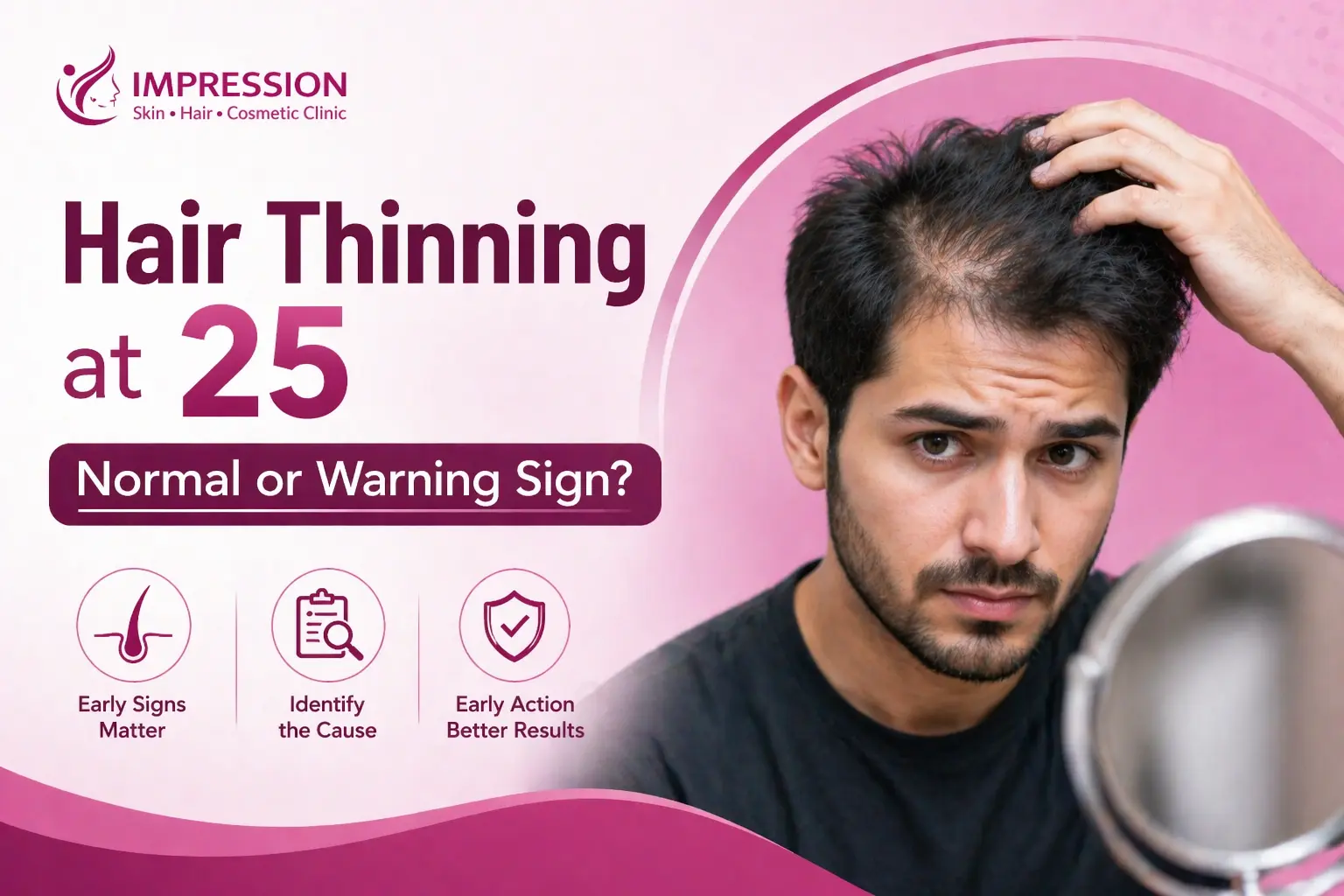
You are 25. You have barely entered your adult life. Your career is just finding its shape. And somehow, inexplicably, you are losing your hair.
If this is your situation, the first thing you need to hear is this: you are not unusual. Hair thinning in the mid-twenties is far more common than most people realise — it is simply not spoken about. Studies consistently show that androgenic alopecia (genetic hair loss) begins in the twenties in a significant proportion of affected men and women, while a separate set of non-genetic causes — from nutritional deficiencies to stress to hormonal shifts — can produce equally distressing hair thinning in young adults who have no family history of hair loss at all.
But common does not mean acceptable, inevitable, or untreatable. Early onset hair thinning detected in your twenties actually puts you in one of the best possible positions: the follicles are still active, the range of treatment options is widest, and the potential for meaningful intervention is highest. The question is not whether something can be done — it is whether you know what to do and when to start.
This guide will give you an honest, detailed, evidence-grounded answer to the question that has been circling in your head since you first noticed the change: Is this too early? And more importantly: What does it mean, and what do I do about it?
| 💡 The Counterintuitive Truth About Early Thinning
Early-onset hair thinning is alarming, but it carries a clinical advantage that older patients do not have: the follicles are younger, more responsive to treatment, and the window of intervention is wide open. A 25-year-old who identifies thinning and begins appropriate treatment is in a fundamentally better position than a 45-year-old who notices the same degree of thinning for the first time. Youth is your advantage — but only if you use it. |
What Actually Counts as Hair Thinning at 25? Separating Signal from Noise
Before addressing cause and treatment, it is worth clarifying what constitutes genuine thinning versus normal variation and typical young-adult hair changes. Not everything that feels like hair loss at 25 is clinically significant.
Normal: The Transition from Adolescent to Mature Hairline
Between the ages of 17 and 29, most men — and some women — experience a transition from their juvenile hairline (rounded, with hair growing relatively low on the forehead) to a mature hairline (slightly higher and more angular at the temples). This is not hair loss. It is a normal maturational change that occurs in the majority of people and does not progress further.
The distinction: a mature hairline transition happens once and stabilises. It does not continue to recede year after year. If your hairline has remained stable for two years since it shifted, it is almost certainly a mature hairline. If it continues to move back, it is genuine recession.
Normal: Increased Shedding After Adolescence
Hormonal fluctuations during late adolescence and early adulthood — as sex hormones settle into adult patterns — can produce episodes of increased shedding. These are typically diffuse (affecting the whole scalp rather than a specific area), time-limited (resolving within 3 to 6 months), and not accompanied by lasting density change. Noticing more hair in the brush or shower at 20 to 23 is often this transitional fluctuation.
Genuinely Concerning: Persistent, Progressive Density Change
What warrants genuine attention is density change that is persistent (lasting more than 3 to 4 months), progressive (getting gradually worse rather than stabilising), and sometimes localised (concentrated at the temples, crown, or across the top of the scalp). This is the pattern that requires professional evaluation and, where relevant, treatment.
| Likely Normal at 25 | Warrants Evaluation at 25 |
| Hairline shifted once and stabilised | Hairline continues to recede over months |
| Brief increased shedding (under 3 months) | Shedding lasting more than 3–4 months |
| Even, diffuse shedding with clear trigger | Localised thinning at crown or temples |
| Hair density unchanged in photos year-on-year | Visible density reduction in dated photos |
| Normal blood markers confirmed by GP | Fatigue, weight changes, or hormonal symptoms |
| No family history of early-onset hair loss | Strong family history of hair loss before 30 |
Why Hair Thinning at 25 Feels Uniquely Unfair — And Why That Response Is Valid
There is a particular kind of unfairness to hair loss in your twenties. Hair loss is culturally and socially expected in older men and is handled with some degree of normalisation and acceptance. In your twenties, there is no social script. Hair loss at 25 is not expected, not widely discussed, and not met with the same social accommodations. You are dealing with a middle-aged problem in a young person’s life — and the psychological weight of that is real and documented.
Research in the British Journal of Dermatology and the Journal of the American Academy of Dermatology consistently shows that younger individuals with hair loss experience greater psychological distress than older individuals with equivalent or greater hair loss. The expected age of loss has not yet arrived; the sense of premature ageing is acute; the fear that it will continue is amplified by the many decades of life still ahead.
Additionally, the social contexts of your twenties — dating, social media, professional networking, building confidence — are ones where appearance plays an outsized role compared to later decades. Hair loss in this period does not occur in a neutral environment.
The Isolation Factor
Because early-onset hair thinning is under-discussed, young people experiencing it often feel uniquely isolated. Peers at 25 are not typically comparing notes on hair loss treatments. There is no community reference point, no normalising context. Social media, which shows highly curated, filtered, and often hairpiece-enhanced images, creates a warped reference frame. The result is a sense of being alone in a problem that is, statistically, affecting a significant proportion of your peers simultaneously.
The Long Horizon Anxiety
A 50-year-old experiencing early hair loss knows that the journey from their current state to significant loss will be measured in years against a life mostly lived. A 25-year-old looking at the same biological process faces a potentially 50-year journey. The question “where will this end up?” has a much more expansive and frightening canvas at 25 than at 50. This existential dimension of early-onset hair loss is often underaddressed by clinicians.
| ❤️ Your Mental Health Matters Too
If hair thinning at 25 is causing you significant anxiety, depression, or social avoidance — these are not overreactions. They are documented clinical consequences of early-onset hair loss that deserve care alongside the physical treatment. A trichologist or dermatologist who treats only the scalp without addressing the emotional impact is giving you incomplete care. Do not minimise your psychological response to this. |
Lifestyle vs. Genetics: The Real Causes of Hair Thinning at 25
Hair thinning at 25 has two broad categories of cause: genetic predisposition (which no lifestyle change will reverse but which treatment can significantly modify) and modifiable triggers (which lifestyle, nutrition, and treatment can often resolve substantially or completely). Most young people experiencing early thinning have a combination of both at play, which is why a thorough investigation matters.
The Genetic Foundation: Androgenic Alopecia in Your Twenties
Androgenic alopecia — the most common form of hair loss, driven by DHT (dihydrotestosterone) sensitivity in hair follicles — can and does begin in the twenties. Approximately 16 percent of men between 18 and 29 show some degree of androgenic alopecia. Among men in their thirties, this rises to approximately 30 percent. By the forties, it affects roughly half of all men.
For women, androgenic alopecia (called female pattern hair loss or FPHL) more commonly presents around perimenopause, but in women with PCOS or other hormonal conditions that elevate androgens, it can begin in the early to mid-twenties with diffuse crown thinning and a widening parting.
The critical point: if androgenic alopecia is the cause of your thinning at 25, this is neither your fault nor a product of your lifestyle choices. It is a genetic reality. But it is a genetic reality that responds to treatment — and the earlier treatment is initiated relative to onset, the more follicles are preserved in the responsive window.
Nutritional Deficiencies: The Most Correctable Cause
The twenties are a decade of significant dietary inconsistency. University life, the transition to independent eating, irregular schedules, financial constraints, frequent social eating and drinking — all create conditions where nutritional gaps emerge. Hair follicles, among the most metabolically active cells in the body, are disproportionately vulnerable to nutritional insufficiency.
The most commonly implicated deficiencies in early-onset hair thinning:
- Iron and ferritin: Particularly common in menstruating women and in anyone following a plant-based diet without careful planning. Ferritin below 40 to 70 ng/mL is associated with diffuse hair thinning even when haemoglobin (clinical anaemia marker) is normal.
- Vitamin D: Epidemic in urban, office-based, sun-avoiding young adults. Vitamin D receptors exist in hair follicles and deficiency disrupts the hair growth cycle. Levels below 30 ng/mL are associated with increased hair shedding.
- Zinc: Involved in protein synthesis, cell division, and hormonal enzyme function. Deficiency — common in vegans, frequent athletes, and heavy alcohol consumers — produces diffuse thinning.
- Protein: Hair is keratin — protein. Low-calorie diets, restrictive eating, or simply not eating enough protein relative to body weight directly starves follicles of their building material. The impact is typically visible 8 to 12 weeks after the dietary period.
- B vitamins (particularly B12 and biotin): B12 deficiency is common in plant-based eaters; biotin deficiency, though over-marketed as a hair supplement, is genuinely relevant when it occurs (often from gut issues or prolonged antibiotic use).
- Selenium and omega-3 fatty acids: Selenium regulates thyroid function and acts as an antioxidant in follicle tissue; omega-3 deficiency is associated with scalp inflammation and follicle weakening.
Stress: Chronic, Low-Grade, and Clinically Relevant
The mid-twenties are, for many people, one of the highest-stress periods of adult life. The pressure of establishing a career, navigating financial independence for the first time, managing social expectations, and building identity under constant digital scrutiny creates a sustained cortisol load that previous generations did not experience in quite the same form.
Cortisol suppresses the IGF-1 signalling that maintains follicles in the active growth phase. Sustained elevation — not a single acute event, but months of chronic moderate stress — pushes a disproportionate number of follicles into the resting phase simultaneously. The resulting telogen effluvium produces diffuse thinning that, against the background of a young adult’s anxiety about hair loss, can itself become a source of further stress, creating a self-perpetuating loop.
Hormonal Fluctuations and Conditions
For women in their twenties, hormonal causes of hair thinning are particularly significant and frequently underdiagnosed. PCOS (polycystic ovary syndrome) affects approximately 8 to 13 percent of women of reproductive age and is a common cause of androgen-driven hair thinning in young women. Irregular periods, acne, and weight changes are companion signs. Stopping or changing hormonal contraceptives — widely common in the twenties as young women navigate this aspect of their healthcare — can trigger temporary but alarming shedding episodes.
For men, the twenties are when testosterone levels peak and 5-alpha reductase activity (the enzyme that converts testosterone to DHT) is at its most active. In men with genetically susceptible follicles, this peak androgen environment accelerates miniaturisation more aggressively than in older men whose testosterone levels have begun to naturally decline.
Scalp Health and Product Overuse
Young adulthood often involves significant experimentation with hair products, styling techniques, and chemical treatments: bleaching, colouring, keratin straightening, heat styling, dry shampoo overuse. The scalp’s microbiome — a delicate ecosystem of bacteria, yeasts, and fungi that supports follicle health — is sensitive to the accumulation of heavy products, sulphates, and chemical residues.
Additionally, many young adults develop seborrhoeic dermatitis (dandruff/scalp inflammation) during the twenties as sebum production peaks and stress modulates scalp immune response. Chronic, untreated scalp inflammation is an underappreciated accelerant of follicular miniaturisation, particularly in those with genetic susceptibility.
Sleep Deprivation
Sleep is when the body conducts cellular repair, including in hair follicles. During deep sleep, human growth hormone (HGH) release supports follicle cell regeneration. Chronic sleep deprivation — a defining feature of many people’s twenties — reduces HGH secretion, elevates cortisol, and impairs the cellular repair processes that keep follicles healthy. Studies show that consistently sleeping fewer than 6 hours per night is associated with increased hair shedding and slower regrowth.
Over-Exercising Without Adequate Nutrition
An increasingly common pattern in young adults: intensive gym training, endurance sports, or bodybuilding combined with caloric restriction or protein cycling. Extreme exercise without adequate nutritional support creates a physiological stress that can trigger telogen effluvium. Combined with the use of creatine (which may modestly increase DHT in susceptible individuals) or anabolic supplements, the hair impact of certain fitness regimens can be significant.
Hair Thinning at 25: All Causes Mapped
| Cause Category | Specific Trigger | Reversible? |
| Genetic | Androgenic alopecia (DHT sensitivity) | Manageable with treatment; not fully reversible |
| Nutritional | Low ferritin / iron deficiency | Fully reversible with correction |
| Nutritional | Vitamin D deficiency | Fully reversible with correction |
| Nutritional | Low zinc or selenium | Reversible with dietary/supplement correction |
| Nutritional | Insufficient protein intake | Reversible once diet is optimised |
| Hormonal | PCOS (women) | Manageable with treatment |
| Hormonal | Stopping oral contraceptives | Temporary; resolves in 6–9 months |
| Hormonal | Thyroid dysfunction | Reversible when thyroid is treated |
| Stress | Chronic cortisol elevation | Reversible once stress is managed |
| Stress | Acute event (exam, bereavement, illness) | Temporary; resolves in 3–6 months |
| Lifestyle | Sleep deprivation (chronic) | Reversible with improved sleep |
| Lifestyle | Over-exercise without nutrition | Reversible with dietary support |
| Lifestyle | Crash dieting / caloric restriction | Reversible once diet is normalised |
| Scalp | Seborrhoeic dermatitis (untreated) | Largely reversible with treatment |
| Medication | Certain medications (accutane, antidepressants) | Often reversible on cessation (with GP advice) |
What Early Thinning Is Actually Telling You About Your Health
Hair is sometimes described by clinicians as the body’s barometer. It is one of the few visible, external markers of internal health, and it is remarkably sensitive to disruption. When hair thins at 25, the scalp is often reflecting a broader story about how the body is being treated or what it is experiencing internally.
Signal: Your Nutrient Status
Diffuse thinning across the whole scalp, particularly in the absence of a family history of hair loss, is one of the strongest signals that your nutritional status needs attention. The body’s triage system prioritises organs over hair — hair is one of the first casualties when resources are diverted. If you are thinning diffusely at 25 and feel generally tired, this combination specifically points toward ferritin and vitamin D as the first investigation priorities.
Signal: Your Stress Load
Hair that begins thinning 8 to 12 weeks after a period of intense stress, change, or pressure is almost certainly telogen effluvium — the body’s physical record of the stress event. The hair is not permanently gone; it is temporarily resting. But the body is telling you clearly that the stress load exceeded what it could sustain without physiological consequences.
Signal: Your Hormonal Health
In women aged 20 to 30, hair thinning that is accompanied by irregular periods, acne (particularly along the jawline), unexplained weight gain or difficulty losing weight, or excessive facial or body hair is a strong composite signal of PCOS. This constellation of signs — with hair thinning as the most distressing outward marker — is a prompt to see a gynaecologist and endocrinologist, not just a trichologist.
Signal: Your Thyroid
Thyroid dysfunction is underdiagnosed in young adults because it does not fit the expected demographic profile. But Hashimoto’s thyroiditis (autoimmune hypothyroidism) in particular frequently presents in young women between 20 and 35 with fatigue, brain fog, cold sensitivity, and hair thinning. If you experience hair thinning alongside any of these companion symptoms, a full thyroid panel (not just TSH) is essential.
Signal: Your Gut
Gut health is increasingly recognised as a central modulator of hair health. Conditions like coeliac disease (gluten sensitivity), irritable bowel syndrome, SIBO (small intestinal bacterial overgrowth), and post-antibiotic gut dysbiosis can severely impair absorption of the very nutrients hair follicles depend on — particularly iron, zinc, and B vitamins. If you eat well but still show deficiencies in these markers, gut absorption efficiency deserves investigation.
| 🩺 The Blood Panel Every 25-Year-Old With Hair Thinning Should Request
Serum ferritin (aim for >70 ng/mL, not just within ‘normal’ range) Full blood count (CBC) — anaemia, white cell counts Vitamin D (25-OH) — optimal 50–80 ng/mL Thyroid panel: TSH, free T3, free T4, anti-TPO antibodies Zinc and selenium levels Fasting glucose and insulin (if PCOS is suspected in women) DHEA-S, free testosterone, and SHBG (if androgen excess is suspected) Vitamin B12 and folate (particularly for plant-based eaters) ANA (antinuclear antibody) if autoimmune conditions are suspected |
Can Diet Fix Hair Thinning at 25? The Honest, Nuanced Answer
Diet is frequently oversimplified in hair loss discussions — either dismissed entirely (“just genetics, diet doesn’t matter”) or over-credited (“eat these 10 foods for instant hair growth”). The truth sits between these extremes and depends entirely on whether a nutritional component is actually present.
When Diet Can Make a Decisive Difference
If your hair thinning is primarily driven by nutritional deficiency — particularly iron/ferritin, vitamin D, or protein insufficiency — correcting that deficiency through diet and targeted supplementation will produce real, measurable improvement in hair density. This is not a marginal effect. Iron deficiency-related hair loss that is corrected with adequate iron supplementation typically shows clear improvement in hair density within 4 to 6 months. This is a direct causal correction.
Similarly, a young adult who has been crash dieting and begins consuming adequate protein again will see hair shedding slow and eventually stop as follicle nutrition is restored. Diet is not just supportive in these cases — it is the treatment.
When Diet Is Supportive but Not Sufficient
If the primary driver of thinning is genetic androgenic alopecia, diet cannot reverse DHT-mediated follicular miniaturisation. However, diet plays a meaningful supportive role: optimal nutritional status improves follicle resilience, reduces the physiological stress on already-vulnerable follicles, and enhances the response to medical treatments like finasteride and minoxidil. A 25-year-old with androgenic alopecia who also has low ferritin will have significantly worse outcomes from hair loss medication than one who is nutritionally optimal.
Foods That Genuinely Support Hair Health
Rather than prescribing a list of superfoods, here is what the nutritional evidence actually identifies as meaningful for follicle function:
- Protein at every meal: lean meat, fish, eggs, dairy, legumes, tofu. Target 1.0 to 1.2 grams per kilogram of body weight daily.
- Iron-rich foods combined with vitamin C: red meat and lentils are iron-rich; pairing them with peppers, tomatoes, or citrus dramatically increases iron absorption.
- Fatty fish (salmon, mackerel, sardines) 2 to 3 times per week: provides omega-3 fatty acids that reduce scalp inflammation and support follicle health.
- Nuts and seeds: pumpkin seeds and Brazil nuts for zinc and selenium; walnuts for omega-3. A small handful of mixed nuts daily covers several micronutrient needs.
- Eggs: one of the most complete hair nutrients — providing protein, biotin, zinc, selenium, and iron in a single food.
- Spinach, kale, and dark leafy greens: non-haem iron, folate, and vitamin C in combination.
- Sweet potatoes and carrots: beta-carotene (converted to vitamin A), which supports sebum production and scalp health.
Foods and Habits That Worsen Hair Thinning
- Crash dieting and very low-calorie regimens: sends the body into triage mode, deprioritising hair within 8 to 12 weeks.
- High sugar and ultra-processed food diet: promotes systemic inflammation and disrupts the scalp microbiome.
- Excessive alcohol: depletes zinc and B vitamins, disrupts sleep quality, and impairs nutrient absorption.
- Raw egg white consumption (common in gym culture): contains avidin, which binds biotin and prevents its absorption when raw eggs are consumed frequently.
- Soy in very large amounts: weak oestrogenic effects that in theory can modulate hormone-sensitive hair loss, though evidence remains mixed and dose-dependent.
What Treatment Options Look Like at 25: Your Widest Window
Being 25 and thinning is not a disadvantage in the treatment landscape — it is actually the moment of greatest clinical leverage. Here is a clear overview of what the evidence supports at this stage.
For Men at 25 with Androgenic Alopecia
Finasteride (1mg oral daily): The most effective pharmacological intervention for androgenic alopecia in men. Reduces scalp DHT by approximately 70 percent. In clinical trials, finasteride halted hair loss in 83 percent of men and produced measurable regrowth in approximately 66 percent over two years. In young men with early-stage loss, outcomes are consistently strong. Side effects (sexual function-related) occur in a small minority and are reversible on cessation in most cases. Requires a prescription and monitoring.
Minoxidil (2% or 5% topical, or low-dose oral): Extends the anagen phase and increases follicle blood supply. Can be used as monotherapy or in combination with finasteride. Most effective when started early. The combination of finasteride and minoxidil is the most evidence-supported approach currently available.
Low-Level Laser Therapy (LLLT): FDA-cleared laser caps and combs for hair loss. Mechanism involves photobiomodulation — light energy stimulating follicle metabolism. Evidence shows modest improvement in hair density as an adjunct to medication, not as a standalone treatment.
For Women at 25 with Hair Thinning
Minoxidil (2% or 5% topical, or low-dose oral): The primary pharmacological option for women. Finasteride is generally not recommended for premenopausal women due to teratogenicity risk. Minoxidil is effective for female pattern hair loss and for general hair shedding conditions.
Spironolactone (anti-androgen, oral): Prescribed off-label for FPHL and PCOS-related hair thinning in women. Reduces androgen activity at the follicle. Effective and well-tolerated; not suitable during pregnancy.
Hormonal evaluation and management: If PCOS, thyroid dysfunction, or other hormonal cause is identified, treating the underlying condition is the primary intervention. Hair improvement follows hormonal stabilisation.
Nutritional correction: For any young woman with confirmed deficiency, aggressive nutritional correction is often the most impactful single intervention available.
For Everyone at 25
- Trichoscopy: Get a professional scalp analysis. Know whether your thinning is androgenic, telogen effluvium, nutritional, or inflammatory. Treatment without diagnosis is guesswork.
- Scalp health: Anti-inflammatory shampoo, daily scalp massage (4 to 5 minutes, fingertip pressure), avoidance of harsh chemical treatments and heat.
- Sleep optimisation: 7 to 9 hours in a dark, cool room. Non-negotiable for follicle repair.
- Stress management with structure: not vague ‘reduce stress’ advice, but specific interventions — breathwork, exercise, therapy where needed, social connection.
Frequently Asked Questions: Hair Thinning at 25
Q: Is thinning at 25 permanent?
A: It depends entirely on the cause. If the thinning is driven by a nutritional deficiency, hormonal disruption, or stress-induced telogen effluvium, it is not permanent — it is a temporary response that fully or substantially reverses when the underlying cause is corrected. If the thinning is androgenic alopecia (genetic), it will progress without intervention, but medical treatment can halt or significantly slow that progression, and early treatment at 25 produces the best outcomes of any point in the progression. Nothing about hair thinning at 25 is automatically or irreversibly permanent with appropriate, timely care.
Q: Can diet fix hair thinning at 25?
A: If a nutritional deficiency is the primary or contributing cause, yes — dietary correction and targeted supplementation can produce significant and lasting improvement. This is particularly true for iron/ferritin deficiency, protein insufficiency, and vitamin D deficiency. If the primary cause is genetic (androgenic alopecia), diet alone will not reverse DHT-driven miniaturisation, but an optimal nutritional status meaningfully improves follicle resilience and enhances the response to medical treatment. Diet is either the solution or an important part of the solution — it is never irrelevant.
Q: Is hair thinning at 25 normal?
A: It is more common than most people realise. Approximately 16 percent of men in the 18 to 29 age group show measurable androgenic alopecia. Non-genetic triggers (stress, nutritional deficiency, hormonal shifts) are also common in this age group. So while it is not universal, it is far from rare. ‘Normal’ in the statistical sense, however, does not mean ‘should be ignored’ — early-onset thinning, regardless of cause, warrants professional evaluation and, where appropriate, treatment.
Q: Can stress alone cause hair thinning at 25?
A: Yes, completely. Chronic stress — even the low-grade, sustained kind that many 25-year-olds normalise as ‘just how things are’ — sustains elevated cortisol levels that progressively push hair follicles into the resting phase. The resulting telogen effluvium produces real, measurable diffuse thinning. The good news is that this is among the most reversible forms of hair loss: once the cortisol load is reduced through lifestyle intervention (sleep, exercise, mindfulness, workload management), follicles return to the growth phase and density recovers, typically within 6 to 9 months.
Q: Should a 25-year-old take finasteride?
A: This is a decision to make with a qualified dermatologist or trichologist after a proper diagnosis. If androgenic alopecia is confirmed and the individual is male, finasteride is the most effective pharmacological option available and its benefits in terms of halting progression at an early stage are clinically significant. The side effect profile (which affects a minority of users and is typically reversible on discontinuation) should be discussed fully and openly. Finasteride is not appropriate for women who are pregnant or may become pregnant.
Q: How do I know if my thinning is genetic or lifestyle-related?
A: The distinction is not always clean, as both can be simultaneously present. However, some useful indicators: genetic thinning tends to follow a pattern (receding hairline in men, crown/parting thinning in women), is associated with family history, and is progressive over years. Lifestyle-related thinning tends to be diffuse (affecting the whole scalp), began at a specific identifiable point, is associated with a clear trigger (period of stress, dietary change, illness), and may be accompanied by other symptoms (fatigue, weight change). A trichoscopy and blood panel together give the most definitive picture.
Q: Can hair products cause thinning at 25?
A: Hair products do not directly cause androgenic hair loss, but certain products and habits can worsen the scalp environment and increase shedding. Heavy product buildup can block follicular openings; alcohol-based products can dry and irritate the scalp; harsh sulphate shampoos can strip the scalp’s protective barrier. Chemical treatments (bleaching, perming, keratin straightening) can weaken the hair shaft and cause breakage that mimics or worsens thinning. Switching to gentle, scalp-appropriate products is an easy, low-risk intervention that supports overall scalp health.
Q: How long before I see results from treatment?
A: Hair operates on a 3 to 6 month response cycle. Any intervention — nutritional correction, medication, or scalp treatment — typically takes a minimum of 3 months to show measurable results. The first sign of response is usually a reduction in shedding rather than visible regrowth. Regrowth, when it occurs, becomes visible at 4 to 6 months and continues to improve for 12 to 18 months with consistent treatment. Patience and consistency are the two most important variables in hair treatment outcomes.
| 💇 Start with Clarity, Not Guesswork — Free Hair Assessment for Under-30s
Our trichology team sees a significant number of patients in their twenties every week. You are not alone, you are not too young to be experiencing this, and you are not too early to benefit from care. Book a free hair fall evaluation today. We will identify the cause, explain your options, and give you a clear, personalised plan — not a generic prescription. |
Disclaimer: This article is for educational and awareness purposes only and does not constitute medical advice. All hair loss conditions should be evaluated by a qualified dermatologist or trichologist for accurate diagnosis and appropriate treatment.
